


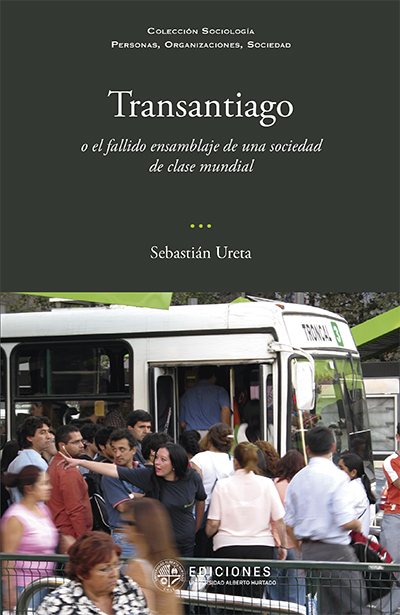
Transantiago
or the failed assembly of a world-class society
$15.000
The exclusion of citizenship from public policy design holds a prominent place in criticisms of the State's actions in Chile. Contrary to this notion, this book argues that human beings, both individually and collectively, are always at the center of any public policy. To better understand the problems of public action, therefore, the relevant question is not why this exclusion occurs, but rather to focus on the mechanisms by which citizenship is included in public policy formulation, which we call “human devices” here.
This book develops this argument through the analysis of Transantiago, the public transportation system of the city of Santiago, Chile. From the beginning of its planning in 2000, Transantiago promised not only to end the historical problems of the city's public transportation system but also to create a “world-class” society, which would confirm the achievements of the social democratic governments in power since 1990. Contrary to these promises, the massive problems faced by Transantiago since its launch in February 2007 led to it being quickly considered a paradigmatic case of how public policy should not be implemented.
Mixing elements from Science, Technology and Society (STS) studies and governmentality theory, this book analyzes the development of Transantiago as the problematic assemblage of a series of highly heterogeneous and incoherent human devices. From this perspective, moving towards better implementation of public policies does not solely involve increasing instances of citizen participation as is usually assumed. Above and beyond these, public policies must be framed within a logic of care that replaces messianic visions with a continuous questioning regarding the origins, means, and consequences of planned intervention in the recipient population.
Buy it in digital format on various platforms such as:


Transantiago or the failed assembly of a world-class society
| Autor | Sebastian Ureta |
|---|---|
| Portada | Ver portada |
| Year | 10-2017 |
| Nº de páginas | 241 |
| ISBN | 987-956-357-116-5 |
| Intellectual Property Registration | 281782 |
| ISBN digital | 978-6-956-357-117-2 |
Ivory paper
Rustic cover
Measures 23 x 15 cm.
Interior Between.
Sebastian Ureta
Chile. Associate Professor in the Department of Sociology at the Universidad Alberto Hurtado. He holds a degree in Sociology and a Master's in Sociology (PUC) and a PhD in Media and Communications (LSE). He has been a visiting professor at Lancaster University, United Kingdom; the Technical University of Berlin, Germany; and the Rachel Carson Center, Germany. His central research area is the analysis of environmental public policies in Chile from a theoretical perspective based on science, technology, and society studies. After dedicating the last few years to analyzing the development of Transantiago, he is currently studying policies related to the management of contaminated soils in Chile, especially those affected by the mining industry. He is also the principal investigator of the Millennium Nucleus for Research on Energy and Society (Numies).Related books
Sociology, People, Organizations, Society

Sociology, People, Organizations, Society
Sociology, People, Organizations, Society
Sociology, People, Organizations, Society
Sociology, People, Organizations, Society

Sociology, People, Organizations, Society

Sociology, People, Organizations, Society
Sociology, People, Organizations, Society
Sociology, People, Organizations, Society
Sociology, People, Organizations, Society
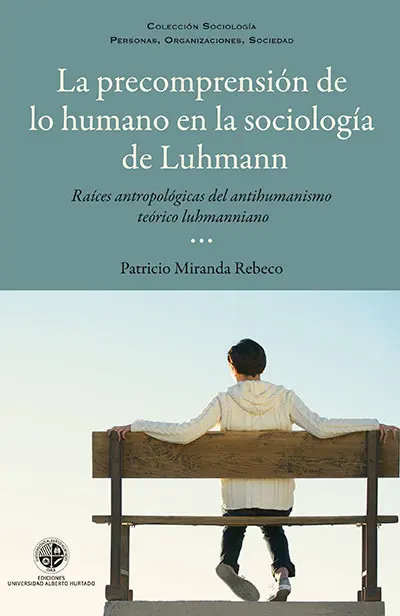
Sociology, People, Organizations, Society
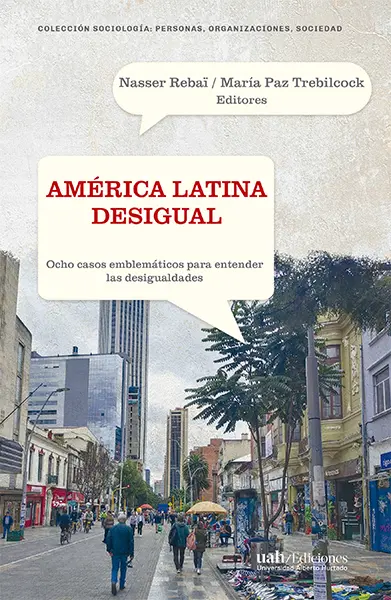
Sociology, People, Organizations, Society
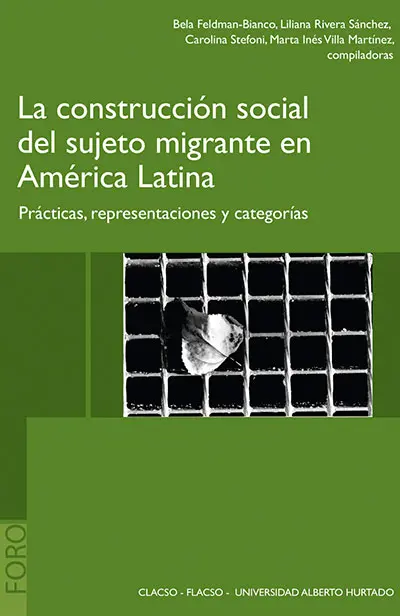
Sociology, People, Organizations, Society
The social construction of migrating subjects in Latin America

Sociology, People, Organizations, Society
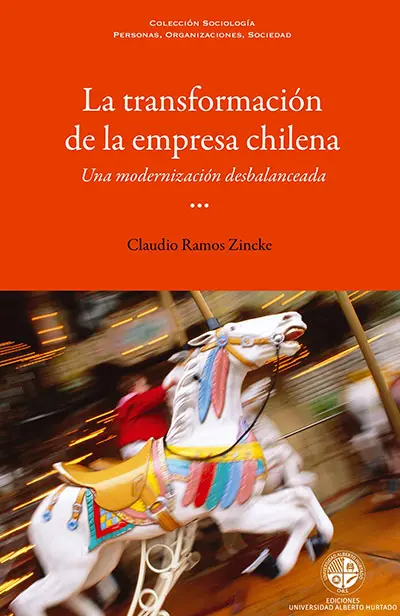
Sociology, People, Organizations, Society