'

Search Results for:

Media | The Return of Sociological Imagination

03 Web Banner EP Magazine Stories

In issue number 181, published in January 2026, the Symposium section of the journal Estudios Públicos features 5 articles written by 5 sociologists. The main theme of these articles revolves around the work "Sociological Narratives and Society." Tomás Moulian, José Joaquín Brunner, and Pedro Morandé: work, networks of...

Launch | Visual Frontiers of Transition. Art, Advertising, and Media Culture in Chile's Return to Democracy.

Visual Frontiers Launch Banner

Monday, March 30 → 7 PM → Manuel Larraín Auditorium E11. Central House → Av. Bernardo O’Higgins 1825. Los Héroes Metro. Downtown Santiago. «Visual Frontiers of the Transition. Art, Advertising, and Media Culture in the Return to Democracy in Chile». Within the framework of the academic year inauguration of the Department of…

Visual Borders of Transition

web visual borders

Drawing on a meticulous review of public and private archives, art historian and curator Sebastián Vidal Valenzuela presents an unprecedented overview of visual arts in the early years of Chile's so-called democratic transition. With theoretical and historiographical acumen, he delves into the cultural transformations of the period, illuminating previously unnoticed connections between works produced after Pinochet's fall and the rhetorical and media strategies that accompanied the installation of the neoliberal model in Chile. Works, exhibitions, videos, films, books, magazines, posters, advertisements, and television programs, as well as institutional cultures and countercultures, are examined from a perspective that, far from placing art in an aesthetically exclusive zone, considers it a critical discourse both immersed in and implicated in key phenomena of the transition culture, such as the televised "NO" campaign, Chile's representation at the Seville Expo '92, and the Santiago School.

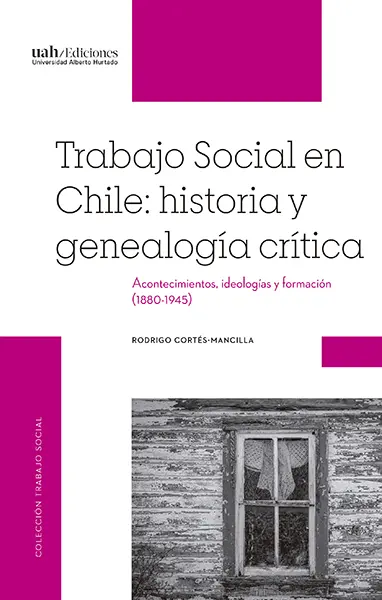
Social Work in Chile: Critical History and Genealogy

social work in Chile web

In times of crisis and transformation, this book invites us to rethink Social Work as a contested field: a signifier in tension, capable of both reproducing the dominant order and subverting it, reactivating its critical, situated, and emancipatory potential. It is not a neutral discipline, but a practice historically shaped by power relations, ideological conflicts, and competing societal projects. It proposes a genealogical-critical reading of Social Work in Chile (1880-1945), conceived as a practice intertwined with the social-colonial question, and analyzes it as a social technology inscribed within the strategies of the modern state: a device for discipline, population management, life administration, and subjectivity production, which delineates the boundaries of the normal, the worthy, and the assistable.

The Amazing Doctor Jover

the amazing doctor jover web

In this novel, nothing is truly as it seems. It tells us about a “Doctor Jover,” but we soon learn that the doctor is María Francisca Jover, a famous and renowned pediatrician living in Barcelona. The interplay between appearance and reality is central to the organization of various aspects. Just as the protagonist's sexual gender navigates between the feminine and the masculine, the novel nimbly jumps from one literary convention to the next. If at one moment it seems like a romance novel, close to the codes of a melodrama, the next it unfolds a series of episodes that invite us to read it as an adventure novel, only to appear a couple of pages later as a police procedural.

Opinion | Active Sisterhood: Anticipating March 8th

BAN: Gabriela Matilde

By Beatriz García-Huidobro Rescuing Matilde Ladrón de Guevara's active sorority with Gabriela Mistral is a clear example that a discourse-based endorsement is not enough; actions that lead to results are required. In feminist, woke, progressive, or whatever we want to call these times, the concept of sorority caught fire like tinder in…

The Boy Who Went Mad with Love and Other Stories

the boy who went mad web

Why seek to cry or read to cry? Read to be moved, to be wept for by the book. With prose that is sometimes lyrical (in the protagonist's voice), sometimes realistic (in the narrator's tone), we are confronted with the found notebook, the intimate inheritance, and the shared secret. A child writes their daily life to cushion what they feel. From its first pages, emotions spring forth and accumulate to impact readers: nervousness, shame, tears, rage. Emotional language distinct from the other language of adulthood. The child can barely bear physical contact with Angélica because idealization cannot withstand the body. In the jargon of our time, the child does not know how to manage their emotions, falling into the logic of the man who idealizes and blames the woman for the mental construction he made of her.

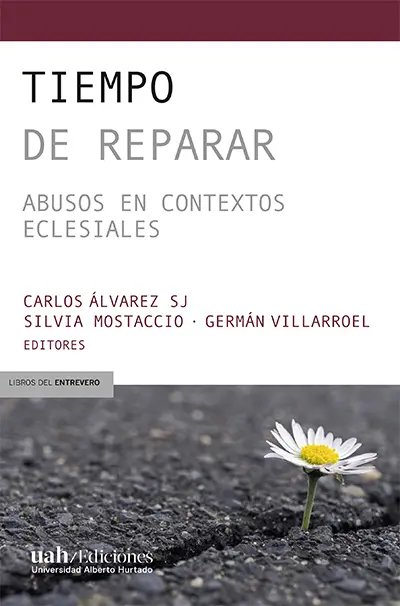
Time to repair

time to repair WEB

Following the indescribable and heartbreaking suffering endured by so many victims—injuries caused by ecclesial representatives and also by institutions that failed in their duty of protection—the Church has begun to implement prevention mechanisms and protocols aimed at a safeguarding culture. The book brings together 23 works that are part of this urgent time of reparation. From interdisciplinary and experiential perspectives, their authors seek to collaborate in the construction of knowledge capable of opening questions, challenging inertia, and inspiring actions that are still pending in numerous spheres and communities.