


Search Results for:

January
By Wolfgang Bongers (excerpt): I should begin by commenting that Expanding Poetry is a «link» book, even if it's not an experimental edition in the sense Fernando uses in the book. It creates a link because it goes beyond a simple history of experimental literary practices in Chile. On the one hand, it is an exploration of…
January
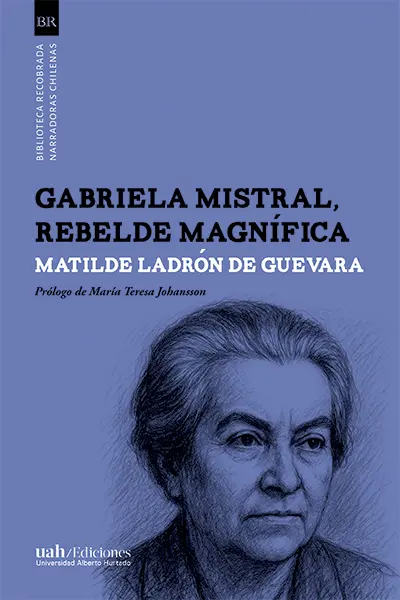
Gabriela's image is deeply humanized. In a heartbreaking global context of war and threats—in which Mistral has emerged as a figure of pacifism—there is room to describe heart ailments and failing vision, alongside the creative writing process of what will be her posthumous book. Poem of Chile. The identities of these women are gradually revealed in the proximity of the days and in the conversation that is reconstructed as if we were listening to them in real time and not in the recollection of their fragments. The correspondence shows how Matilde self-imposed the political and cultural task of repairing the damage that distanced Mistral from Chile and of alleviating the disastrous consequences of the late awarding of the National Prize to Gabriela Mistral to facilitate her reconciliation with Chile.

December
Thursday, December 18th to Sunday, December 21st → 11 AM to 9 PM → Gabriela Mistral Cultural Center → Av. Bernardo O’Higgins No. 227. Santiago Centro. Once again, one of the most interesting book fairs of recent years calls us. More than two hundred independent, university, children's, and foreign publishers are present at this...
December
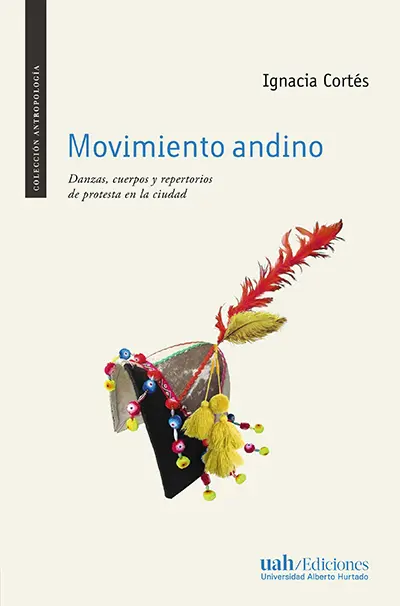
In the words of Cristián Opazo, this book invites readers on a journey that goes from celebration to protest and vice versa. With the rigor of someone who understands American epistemologies and, at the same time, with the expertise of someone who knows the streets, Ignacia Cortés reconstructs the web of affections, bodies, and voices of those who, during the years of the transition, decided to confront alienation with tinku and huayno, always, by dancing! Armed with cassette tapes, photocopied fanzines, sound recordings, and evidence as ephemeral as it is irrefutable, she writes a history of Andean movements that are recounted as acts of defiance: that of migrants who, from the midnight eighties, brought Andean music and dance repertoires that illuminated the neighborhoods; that of the squatters of the nineties who, as the ruins of the public realm became private property, opened houses that fostered the mixing of the chords of street hardcore-punk with the rhythm of tinku; and above all, the defiance of those who, as of the two thousands, continue to teach that dance steps allow one to evade tear gas and hunger, embody memories, and invoke utopias.
December
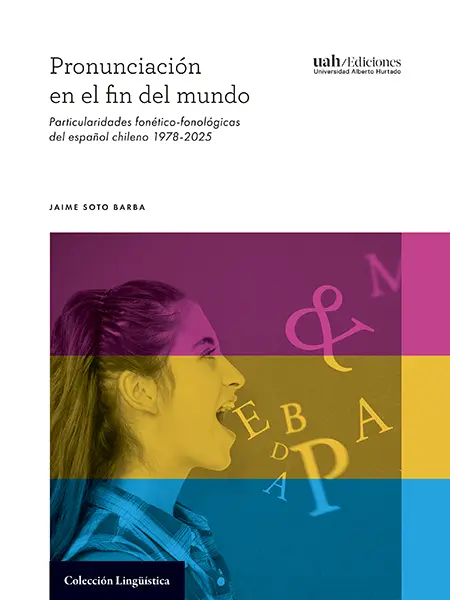
Pronunciation at the end of the world It is a systematic journey through the sounds of our linguistic variety from North to South. The importance of these pages lies in the acoustic-phonetic knowledge regarding the use of allophones and approximants that Chilean society makes on a daily basis, throughout a Chile that has been changing from the 1970s decade to this third decade of the 21st century. The studies that shape the soundscape of Chilean society across its geography are recreated through precise descriptions of different realizations of consonantic sounds. It incorporates the knowledge obtained regarding the perception that Chilean men and women have to geographically recognize other natives of this variety of Spanish by the way they pronounce.

December
This year we will once again be present with our entire catalog at the 4th edition of the Ñuñoa International Book and Reading Festival, with Mexico as the guest country. The program is unmissable! High-level discussions on Octavio Paz, Gabriela Mistral, and current topics. There will be screenings of Mexican cinema that are already...

November
The concept of censorship is associated with the act of silencing and repressing an expression, usually illegitimately and therefore carrying a negative connotation. per se. It is directly associated with control measures implemented by authoritarian or dictatorial governments, placing itself on the opposite side of democracy. This book responds to the challenge of reconstructing how the Chilean state, between 1918 and 1973, adopted a legal framework to control the functioning of the media, despite freedom of expression. Legislation and the application of censorship always responded to political conflicts in which censorship was legitimized as an exception, to maintain social order and protect the institutionality.