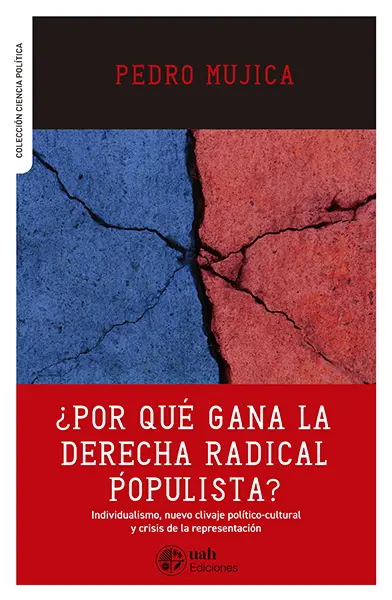
The rise of far-right populisms in the last decade cannot be explained solely by cyclical economic factors or leadership strategies, but rather by the convergence between structural transformations of the contemporary subject and a deep crisis of political representation. This process has produced a new political and cultural cleavage that divides society between an expressive individualism—oriented toward identity recognition and the expansion of rights—and a defensive individualism, centered on order, security, and normative stabilization, with this second orientation succeeding in becoming an electoral majority. The text analyzes the inability of political parties—increasingly unmoored from their social bases—to process these transformations, as well as addressing the crisis of representation that amplifies polarization. The conclusion contains general guidelines that can contribute to the reconstruction of party intermediation and the reinstitutionalization of conflict as necessary conditions to contain the dangerous and destructive illiberal advance.
Search Results for:
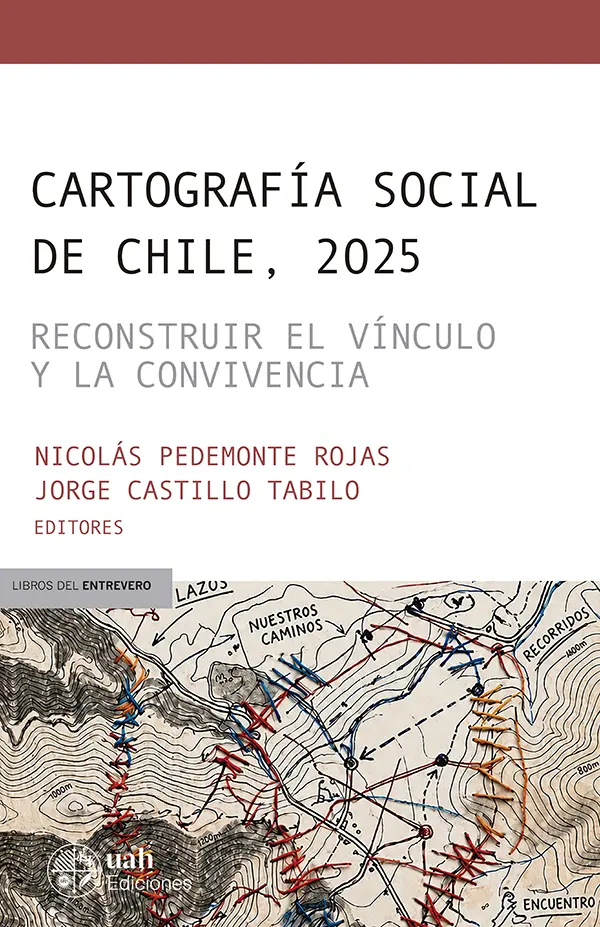
Tuesday, August 25 → 6:30 p.m. → Manuel Larraín Auditorium (E11) → Av. Bernardo O’Higgins 1825. Los Héroes Metro Station. Downtown Santiago. Social Cartography of Chile, 2025. Rebuilding the bond and coexistence. Editors Nicolás Pedemonte Rojas and Jorge Castillo Tabilo. The publication seeks to contribute to public debate and public policy design from...
Social Cartography of Chile is an annual collection that seeks to produce situated knowledge about the country's social reality based on the experience and reflection of civil society organizations. Its commitment is to articulate the knowledge that emerges from territorial work with conceptual categories capable of reading that reality with greater depth and building bridges toward the design of public policies. This second issue takes up the concern for margins and inequalities from the first volume, but shifts its gaze toward a dimension that is more difficult to measure and intervene in: social cohesion and coexistence. Exclusion also operates within formally integrated communities, and the precariousness of their bonds constitutes a central dimension of contemporary poverty.
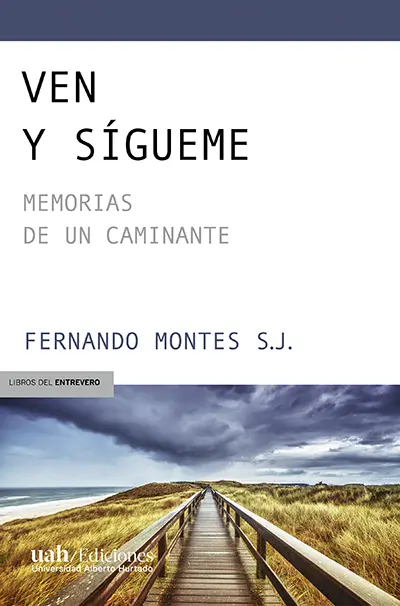
Wednesday, August 12 → 12 hours → Roberto Bellarmino Room. Central House → Av. Bernardo O’Higgins 1825. Los Héroes Metro station. Santiago Centro. Come and follow me. Memoirs of a walker by Fernando Montes SJ The presentation of the memoirs of Father Fernando Montes SJ who, through different episodes of his personal life and…
Father Fernando Montes SJ has had a prolific life since his priesthood, significantly influencing civil society, especially through education, to which he has dedicated much of his energy and vocation. In this book, he revisits moments from his childhood, his family, his formative and priestly years, his time as rector of San Ignacio College, and his subsequent rectorship of the fledgling Alberto Hurtado University. Fernando Montes is a person who has listened to the voices and calls of his time and has humbly and dedicatedly taken on the challenges that each task life has presented him.