This book proposes pedagogical reflection, critical thinking, and creativity in activities related to music education from an “activist” perspective. Critical thinking takes on a fundamental role, as it allows pedagogical reflection to focus on educational and musical aspects oriented towards social justice, inclusion, and interculturality. It also makes it feasible for music educators to dare to think creatively about their pedagogical work, fostering the sustainability of the profession by opening up new training spaces based on humanistic ideals linked to cultural democratization and equal opportunities.
Search Results for:
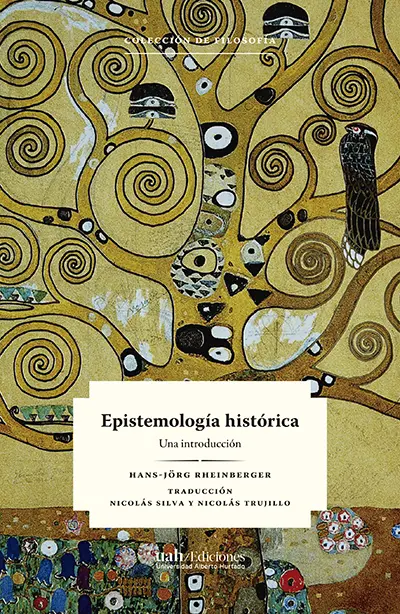
The author presents a journey through the main benchmarks and theories that underpin his methodological and philosophical proposal. In this way, Rheinberger demonstrates the relevance and necessity of incorporating philosophical and historical tools that allow science to be understood beyond its logical or social components. For him, the task of historical epistemology consists precisely in analyzing science as a human activity, composed of diverse technical and conceptual complexities, practices and means, methods and questions, which in their assembly configure “epistemic and experimental systems” with a life of their own. This approach not only allows scientific knowledge to be seen as something dynamic and in constant transformation, but also allows knowledge to be situated in the liminal space of the certain and the uncertain, the known and the unknowable, the necessary and the possible.
How to think together about the self-restraint that is still called for in autonomous works, media, and their disseminated products streaming, the discomfort of artists who call themselves workers and find that the promises of the creative economy dissolve into precarity? If culture is so widespread, can it be democratized with policies that have insisted for half a century only on expanding its dissemination? This book is based on fieldwork in traditional and performative museums and with their users in Chile, Paraguay, and Peru, following the practices of creators and readers in Mexico, the contradictory convulsions of citizen participation, urban memories, and the euphoria and disappointment in political mobilizations that use the languages of art to communicate their imaginaries and rebellions.
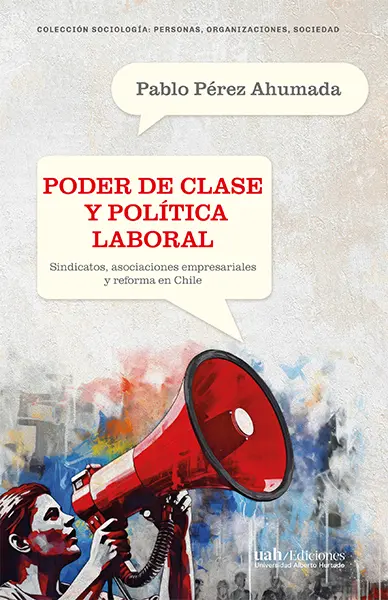
The chronic weakness of the labor movement in Chile has been essentially explained by the labor deregulation imposed by the Pinochet dictatorship and by the subordination of unions to political parties. In this book, Pérez Ahumada introduces a crucial and innovative perspective: class power. He meticulously studies how the strength of social actors, especially employers, channeled through their “associative power,” becomes decisive in explaining the absence of pro-union reforms, even at times when political conditions were optimal, such as during the Nueva Mayoría government. Along the way, he shows how the reproduction of class power has its own present logic, which goes far beyond the institutional legacies of the dictatorship. A key book for understanding not only the case of Chile, but also how power relations play out in contemporary political economies.
Acepto Envío de Novedades Acepto Políticas de Privacidad UAH yves1776@yahoo.com 13 172.16.8.242 Mozilla/5.0 (Windows NT 10.0; Win64; x64) AppleWebKit/537.36 (KHTML, like Gecko) Chrome/120.0.0.0 Safari/537.36 https://ediciones.uahurtado.cl/product-category/sociologia-personas-organizaciones-sociedad/ 14/11/2024 06:45 Ediciones UAH Universidad Alberto Hurtado Inicio mariverap@uahurtado.cl
Acepto Envío de Novedades Acepto Políticas de Privacidad UAH yves1776@yahoo.com 12 172.16.8.242 Mozilla/5.0 (Windows NT 10.0; Win64; x64) AppleWebKit/537.36 (KHTML, like Gecko) Chrome/120.0.0.0 Safari/537.36 https://ediciones.uahurtado.cl/coleccion/psicologia/ 14/11/2024 06:32 Ediciones UAH Universidad Alberto Hurtado Inicio mariverap@uahurtado.cl
Acepto Envío de Novedades Acepto Políticas de Privacidad UAH yves1776@yahoo.com 11 172.16.8.242 Mozilla/5.0 (Windows NT 10.0; Win64; x64) AppleWebKit/537.36 (KHTML, like Gecko) Chrome/120.0.0.0 Safari/537.36 https://ediciones.uahurtado.cl/coleccion/psicologia/ 14/11/2024 06:24 Ediciones UAH Universidad Alberto Hurtado Inicio mariverap@uahurtado.cl
Acepto Envío de Novedades Acepto Políticas de Privacidad UAH abennettdn18@gmail.com 10 172.16.8.242 Mozilla/5.0 (Windows NT 10.0; Win64; x64) AppleWebKit/537.36 (KHTML, like Gecko) Chrome/120.0.0.0 Safari/537.36 https://ediciones.uahurtado.cl/coleccion/psicologia/ 14/11/2024 02:46 Ediciones UAH Universidad Alberto Hurtado Inicio mariverap@uahurtado.cl
Acepto Envío de Novedades Acepto Políticas de Privacidad UAH st.fiofab@yahoo.com 9 172.16.8.242 Mozilla/5.0 (Windows NT 10.0; Win64; x64) AppleWebKit/537.36 (KHTML, like Gecko) Chrome/120.0.0.0 Safari/537.36 https://ediciones.uahurtado.cl/coleccion/psicologia/ 14/11/2024 02:03 Ediciones UAH Universidad Alberto Hurtado Inicio mariverap@uahurtado.cl
Acepto Envío de Novedades Acepto Políticas de Privacidad UAH rfabianmd1990@gmail.com 8 172.16.8.242 Mozilla/5.0 (Windows NT 10.0; Win64; x64) AppleWebKit/537.36 (KHTML, like Gecko) Chrome/120.0.0.0 Safari/537.36 https://ediciones.uahurtado.cl/coleccion/psicologia/ 14/11/2024 01:44 Ediciones UAH Universidad Alberto Hurtado Inicio mariverap@uahurtado.cl