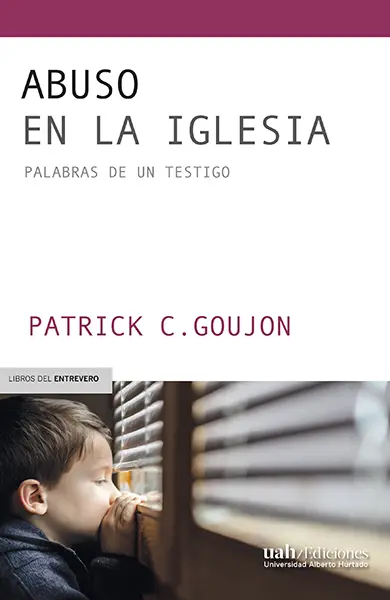
These are some of the profound reflections that Patrick C. Goujon shares with sincerity and utmost delicacy in this testimonial book, which recounts the long and cumbersome path one travels after a traumatic experience. There is the pain of that child he once was and that of the man who cannot process his wounds as long as he does not speak, as long as he does not give existence to what has remained hidden. And there is the harsh encounter with reality, with the justice systems, with other people who knew and said or did nothing; with the long time that on its own brings neither comfort nor oblivion.
Search Results for:
Under the notion of the critique of the political economy of space, and from different proposed approaches, the book attempts a delimitation of the critique of capital and the production of modern space as a social totality. Indeed, the critique of modernity, from the perspective of the critique of the political economy of space, is a critique of the abstract logic of value and its expression in the social production of space, where the latter, in its urban dimension, corresponds to the space produced for the reproduction of capital—that is, exchange, the place that completes the circulation process which realizes the totality of commodity production.
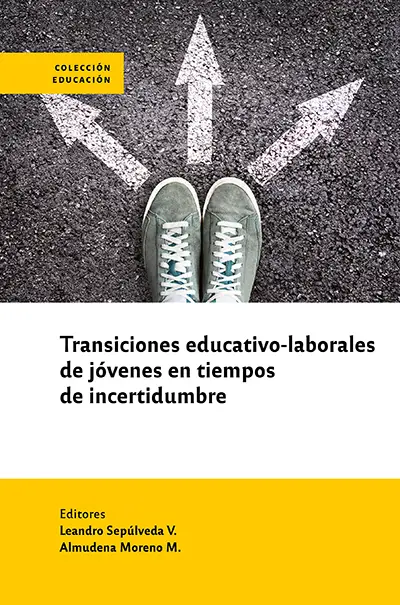
What impact is the massification of higher education having on young people's transition to working life? Why are they leaving their parents' homes later and later? Is the experience of being young lived in the same way across the diversity of our societies?
The study of youth trajectories and the analysis of the various transition contexts that the new generations currently experience constitute a topic of renewed interest in social science research. The extension of the educational experience and the massification of higher education, profound productive transformations and their effect on labor organization and access to employment, as well as changes in intergenerational relations and the processes of independence and residential autonomy, constitute some of the fields where transitional analysis provides new background information for understanding social reality and discussing new perspectives to guide the development of policies functional to such transformations.
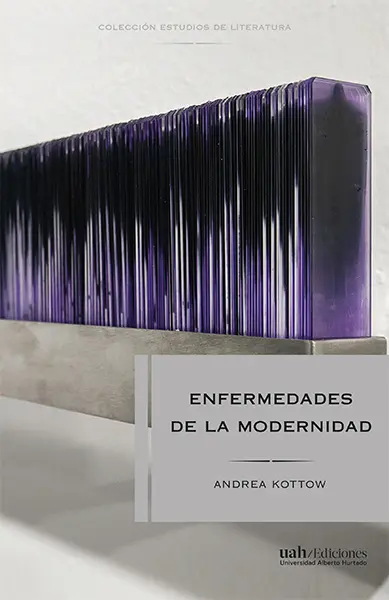
What are the images, conceptions, and metaphors of health and illness that appear in Chilean literature between 1860 and 1920? How are literary discourses linked to other social discourses regarding the constitution of images of health and illness? How are certain aspects of the modernizing process problematized in literary symbolizations of health and illness?
Health and illness are as present as the oppositional pairings of good and evil, culture and nature, body and mind, masculine and feminine, etc., pervading a range of practices, including the literary sphere. The issues surrounding illness and its literary representations, as well as the aesthetic mobilizations of the healthy and the morbid, have multiple facets.
Tuesday 09/13 // 6 PM // UAH / Digital TV «Homoeroticism, Sociability, and Discretion» by Juan Cornejo Espejo This release will be a conversation about homoeroticism and how societies have denied, invisibilized, and outlawed it, without it ceasing to emerge in different spheres. Juan Cornejo. Academic from the Department of...
Thursday, August 25 / 6 PM / uah // Digital TV «Ethnomusicology Redefined. Translations for the 21st Century» editor Jacob Rekedal Ethnomusicology and its growing importance in these times is not only in the realm of music, but also in culture and society, a fascinating and little-explored topic is the...
Excerpt: The publication of «Mirar de lejos: descripciones» by Sandra Accatino leads a conversation with the art historian and academic, on a journey that includes Western art classics, as well as objects belonging to cabinets of curiosities, gathered in this book.
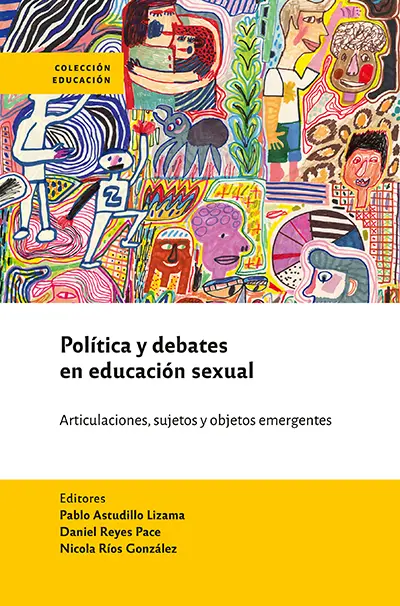
A topic is addressed that has been debated and controversial for many decades in the history of Chile, even more so when it is placed in the public sphere as part of educational policy. Family or State? This is the ever-present question regarding who, ultimately, is responsible for providing sex education to the new generations. It is this discussion that has shaped the changes in the boundaries regarding the approach to content and perspectives, as well as the proactivity of the authorities in implementing sex education programs in educational institutions.
However, changes in subjectivities and social contexts mean that debates and arguments surrounding sex education are constantly being revisited. People's experience of their sexuality has changed and is under constant review, which challenges (or should challenge) any educational project. Reflecting on the type of person one wishes to educate implies incorporating new knowledge about human sexuality and the values surrounding it. Current times demand that we do not remain in binary debates, but rather resort to the use of other complex analytical categories: how subjects construct their experience, how sexuality is discussed, and how anthropological assumptions and modes of exercising power organize the discussion around it, among other elements of the utmost importance.
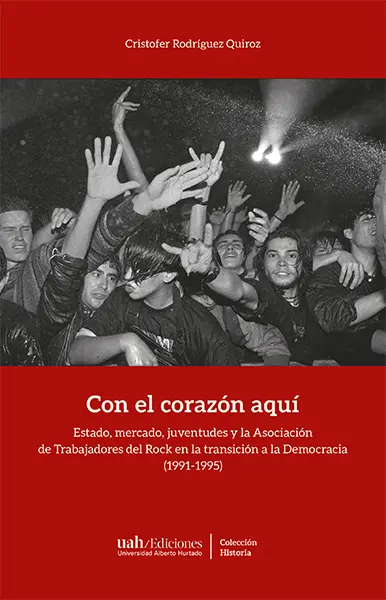
In December 1991, the first musicians' union was formed after the dictatorship ended. The Rock Workers' Association, ATR, was a collective that brought together a large part of the music scene linked to rock, pop, and other related genres during the first years of Patricio Aylwin's government, in addition to including technicians, communicators, and industry agents.
As three decades since the end of the Dictatorship and the return to Democracy are met, and considering the constituent process opened after the social outbreak of October 2019, the findings of this research acquire particular relevance. The history of the Association of Rock Workers is also a history of the Chilean Transition in its early, complex, and contradictory years. A microhistory with a social focus on culture, about young people and rockers in the early years of the return to democracy.
Tuesday 23rd / 6:30 PM / UAH / Digital TV «The Chilean Novel of Grínor Rojo» This launch will be a conversation with the distinguished academic and critic Grínor Rojo, discussing his recent publication which covers almost 150 years of novels in Chilean literature. It is a special tribute to the...