'

Search Results for:

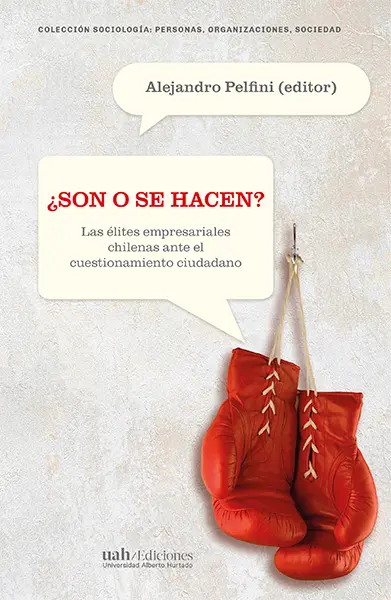
Are they born that way or do they become that way?

Are you making websites?

Few concepts in the social sciences are as controversial—imbued with common sense and difficult to define—as that of elite. One contribution of this book is the perspective with which elites in general are defined and analyzed. “Are they born that way or do they become that way?” It refers both to the type of elite they represent and to their main reactions to the recent context of citizen demands and apparent “discontent.” More precisely, whether they are capable of processing them and revising their own behavior, generating some type of learning and transformation of their own preferences and cognitive and cultural maps. Or, whether, in the face of generalized bewilderment, they end up reflexively repeating already rehearsed responses.
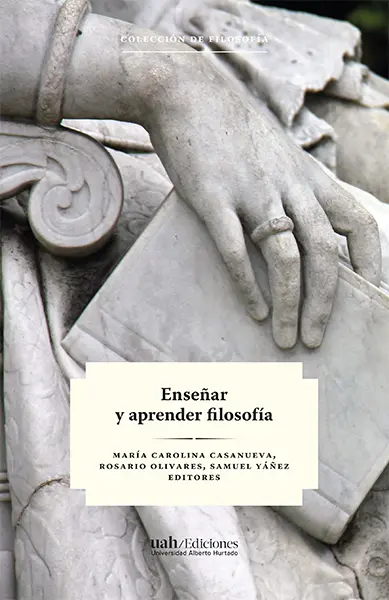
 

Teaching and learning philosophy

Teach learn web philosophy


Why is it important for this subject to be present in the training of every school and high school? Why is its relevance in the school curriculum frequently called into question? As early as Socrates, the dialogical, questioning, and political character of philosophical activity can be appreciated. Today, how could philosophy stop addressing the socio-ecological problem, the difficulties faced by civic coexistence in Chile, the quests for recognition and integration of diverse differences, the relationships between truth and politics, and the challenges of a non-sexist education? This book deals with the teaching of philosophy in secondary education: what meaning it has, what its contributions are, why it is necessary, and what emphasis it should have today.

Outskirts

Low peripheral

When analyzing an early period of urban settlement in Santiago, from 1920 to 1940, Simón Castillo and Waldo Vila shed light on a little-studied period of the city's peripheral development, at least in relation to what happened before and after, revealing not only why this period was of crucial importance but also how the fundamental dynamics at play in Chile have been important elsewhere.

This book investigates those places and specifically residential living, through populations for sale and rent of lots, a subdivision modality used in almost all of the city's suburbs –except for the eastern zone– during the first half of the 20th century. In an impressive feat of historical research, the authors have scoured municipal and national archives, discovering how residents and local neighborhood associations organized and lobbied for change.

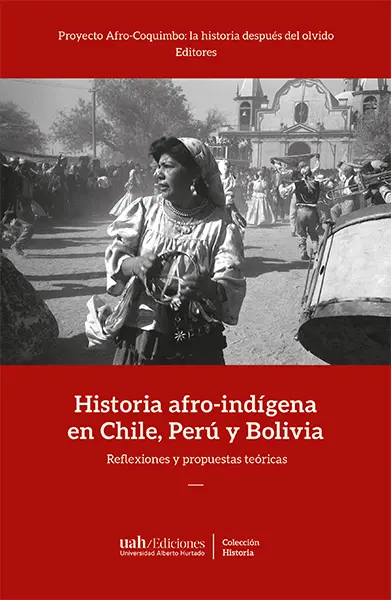
Afro-Indigenous History in Chile, Peru, and Colombia

Afro-Indigenous History Web

The maroonage of Africans is a factor that has been minimally referenced and investigated in Chilean historiography. We must acknowledge the difficulty of tracing it, because if they succeeded in their feat, all that remained was the record of their sale, in some cases parish records, in others the report of the escape made by the master before the corresponding notary, or when they were captured. The investigative experience of palenques or quilombos has demonstrated that maroons created true territorial enclaves of resistance, preserving their cultural systems, forging links with indigenous peoples or individuals. The presence of Afro-descendants in Chile seems difficult to trace, especially after the second half of the 19th century. The context is complex, as the country was undergoing a process of national consolidation. The problem of alterity, that is, the representation of bodies and cultures that have apparently disappeared, concerns us in the Chilean case, where a culturally and genetically homogeneous country is assumed, when in reality it is quite the opposite.

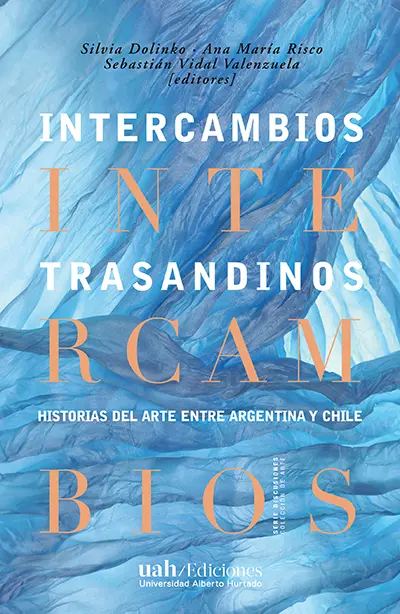
Trans-Andean Exchanges

Trans Andean Exchanges Web

The works collected in this book were written by a large group of specialists and are organized into three axes: “Journeys and Transitions,” “Poetics and Positions,” and “Networks and Institutions.” They address issues such as geopolitics and the symbolic construction of landscape; institutionalism, alternative projects, and exhibitions as devices for reflecting on the regional; the role of images in the fabric of politics, from revolutionary fervor, dictatorships, exiles, and democratic recovery; the techniques, technologies, and materialities of artistic production; gender, the body, and discourses about art produced by women; the narratives and sources of art historiography; and the regional and international movements of artists and artworks.

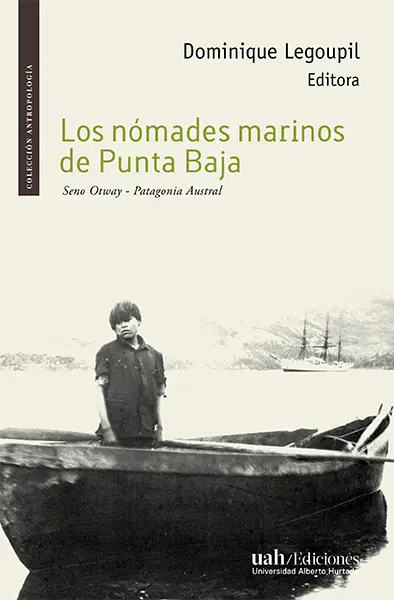
The Sea Nomads of Punta Baja

Los Nomades Punta Baja web

The hunter-gatherers of Patagonia are part of ethnology's mythological foundation, just like the Tasmanians, the San, or the Inuit. Who were they? Land hunters driven out of the Pampas? Fishermen adapted to a new environment? Archaeological research in the western and northern archipelagos will be necessary to resolve this issue. How did they live? Beyond the commonplaces that outline the main aspects of their maritime adaptation, we still lack knowledge of many important details, such as their detailed seasonal cycles and the extent of their nomadic territories.

The monographic presentation of the site has allowed, while primarily seeking the technical, economic, and social rules of its occupants, to present all the observed documents, some of which, whose interpretation we may have overlooked, may reflect cultural particularities.

Financial and Managerial Accounting – Volume III

Financial accounting T3 low

This book, Financial and managerial accounting, it is part of three independent publications, though linked in their general theme and methodology: Volume I – Fundamental concepts, Volume II – Practical applications and solutions y Volume III – Cases and exercises. Financial accounting is legally mandatory, public, historical accounting, based on international principles and standards, and is applied to the company or economic group as a whole. The author links accounting information with costs, planning, and decisions in a simple and basic way through solved and proposed exercises and cases, providing methodologies by which an integrative “economic-administrative” mindset of these disciplines is formed, in order to face and solve especially quantitative problems.

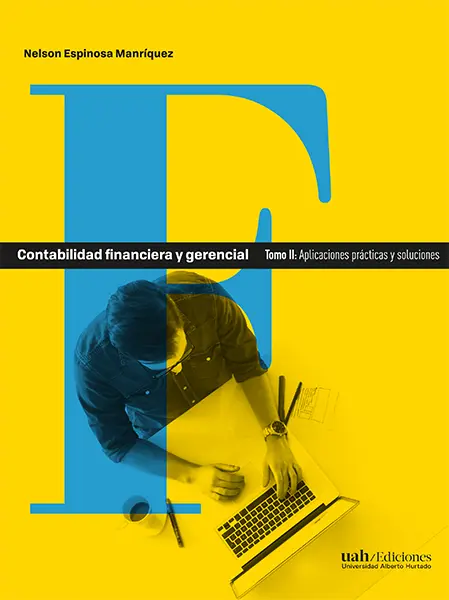
Financial and Managerial Accounting - Volume II

Financial accounting T2 low

This book, Financial and managerial accounting, it is part of three independent publications, though linked in their general theme and methodology: Volume I – Fundamental concepts, Volume II – Practical applications and solutions y Volume III – Cases and exercises. Financial accounting is legally mandatory, public, historical accounting, based on international principles and standards, and is applied to the company or economic group as a whole. The author links accounting information with costs, planning, and decisions in a simple and basic way through solved and proposed exercises and cases, providing methodologies by which an integrative “economic-administrative” mindset of these disciplines is formed, in order to face and solve especially quantitative problems.

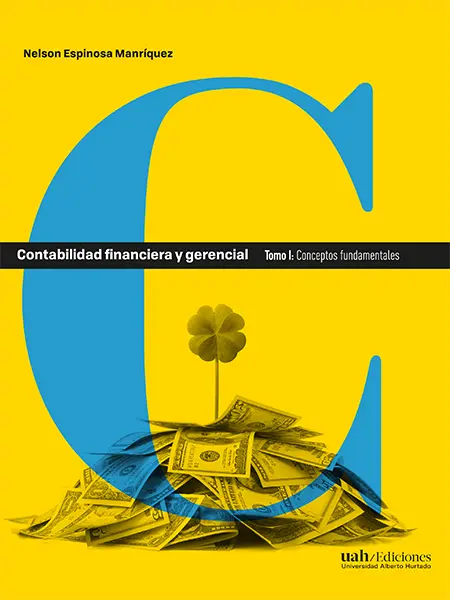
Financial and Managerial Accounting – Volume I

Financial Accounting T1 low

This book, Financial and managerial accounting, it is part of three independent publications, though linked in their general theme and methodology: Volume I – Fundamental concepts, Volume II – Practical applications and solutions y Volume III – Cases and exercises. Financial accounting is legally mandatory, public, historical accounting, based on international principles and standards, and is applied to the company or economic group as a whole. The author links accounting information with costs, planning, and decisions in a simple and basic way through solved and proposed exercises and cases, providing methodologies by which an integrative “economic-administrative” mindset of these disciplines is formed, in order to face and solve especially quantitative problems.

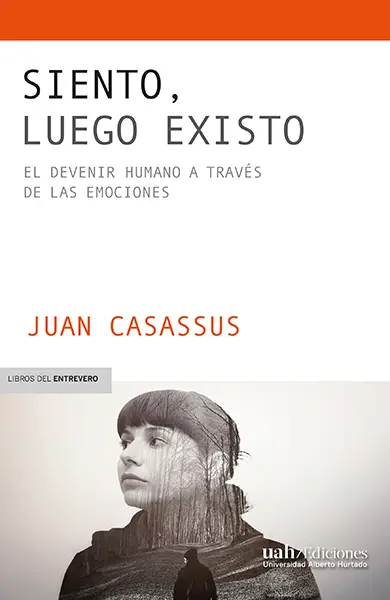
I feel, therefore I am

I think, therefore I am

In this book, Juan Casassus examines thirty years of research on emotions from philosophy, neuroscience, and psychology to show us that emotions are intelligent and cognitive, and that each person constructs them based on their life experience. Emotions participate in our lives to protect us, address problems, and give them meaning. To enhance our emotional capacities, it is essential to overcome the damaging myths that distort them and to explore a deep and operational understanding of what they do.

The text is aimed at those who want to unveil emotions and learn to see the world through them, a world that this time opens up in a way they have never perceived before.