


{«version»:2,»isGlobalStylesUserThemeJSON»:true}
Search Results for:

19
May
May
By Josefina Muñoz, Chilean Literature This book not only thoroughly recounts the terrible history of those years, but also reveals the close ties that bound together those who represented the economic, political, and military powers, which allowed our society to live through this long and brutal seventeen-year period, only to then have to negotiate the…

12
May
May
By Nina S. Castillo. Film Graduate. The collection, derived from essays, interviews, and film archives, not only aims to account for her aesthetic program, but at the same time provides us with the possibility to delve deeper into her trajectory through different critical devices. The voices that were called upon in the eleven essays, oxygenate the...

11
May
May
For 19 years, the University Alberto Hurtado's Journalism Excellence Award has selected great journalists, editors, professors, and communication thinkers to choose, as pre-jurors and final jurors, those journalistic works that go above and beyond: those that uncover causes, consequences, trends, what is happening, and what shows the seeds of what is to come. This book is a prime example of this: the texts contained herein, winners and finalists in the Written Journalism categories of Investigation, Reportage, Chronicle, and Interview, bring the hidden to light and apply the flashlight and magnifying glass so that we can clearly see what they want to hide from us or what we could not or did not want to see.

10
May
May
What is ethnomusicology? Why is it relevant today? How has this field of study changed over time, and what potential does it hold for shedding light on complex issues related to music, sound, culture, and society? The topics in this book vary widely, and the collection does not shy away from contradiction, nor does it aim to paint a sharp and cohesive picture of ethnomusicology in other latitudes. Instead, the chapters in this book tackle key challenges in the discipline, ranging from the ethical and political to the existential and ontological. They represent a discipline that is at once brimming with innovation and struggling to reconcile its place in a world fraught with conflict.
09
May
May
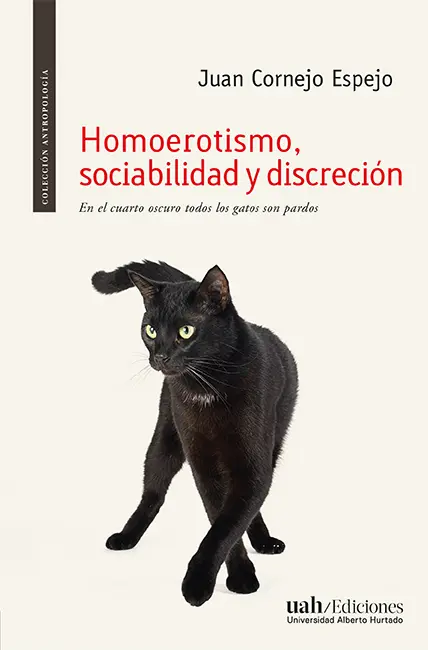
This book speaks of desire. Homoerotic desire that bypasses controls, censorship, fears, and even self-repression. Desire that knows nothing of races, hierarchies, or social orders. Desire that is fulfilled and satisfied in the flesh, yet without renouncing fantasy. Beyond the tangle of explanations, admonitions, and reprimands that homoerotic desire sometimes awakens in societies that deny, invisibilize, and proscribe it, desire bursts forth through the interstices of the human soul. This study presents ethnographic accounts that address precisely that desire, placing it at the center of reflection, set within the performative arena of a bathhouse in the historic center of Santiago.

06
May
May
Thursday, May 12 // 6:30 PM // UAH / Digital TV From «apolitical» to militants. The incorporation of women into the Chilean Conservative Party (1934-1952), author Camila Sanhueza Acuña. A dialogue on the historical role of women in politics and especially how elite women managed to get the Conservative Party to...

29
April
April
Saturday, April 30 // 11 AM to 6 PM // Parque Inés de Suarez, Providencia This Saturday our books will arrive at Parque Inés de Suarez along with many independent and university publishers. We'll be there with incredible discounts to conclude the celebration of Book and Copyright Month.

25
April
April
Thursday, April 28 // 3:00 PM UAH // Digital TV «The Impact of the Truth and Reconciliation Commission in Chile. A Long-Term Historical Perspective» by Anita Ferrara A deep and respectful dialogue about the role and the ways in which this commission contributed and continues to contribute to...
22
April
April
Tuesday, April 26 // 1:00 PM // UAH // Digital TV «Policarpo. Catholicism, Public Space, and Political Opposition. Chile 1981-1983» By Martin Bernales and Marcos Fernández Labbé (editors). Martin Bernales and Marcos Fernández are the editors of this publication which contains texts that were clandestinely published in the magazine Policarpo between July 1981 and...