'

Search Results for:

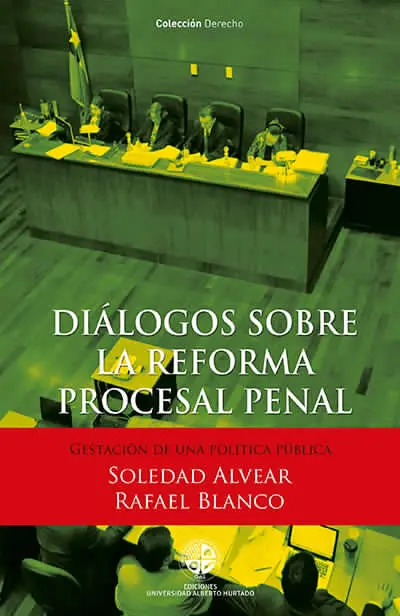
Dialogues on criminal procedural reform

In an unprecedented public policy process, which included the participation and collaboration of the three branches of government, the legal community, academia, research and think tanks, and the media, Chile succeeded in transforming its antiquated, inquisitorial, and secret criminal justice system into an adversarial, oral, and public one. Soledad Alvear Valenzuela and Rafael Blanco Suárez, who championed what was called the ‘Reform of the Century’ from its inception, dared in this text to go beyond describing the transformation of procedures, contributing to the management of modernizing state initiatives.

Chile 1971

Chile 1971. The first year of the Popular Unity government is the second volume of the MEMORY AT FORTY YEARS series. Eighteen authors, twelve of them direct participants, capture the accelerated pulse of Chilean society following the 1970 election. It is something more than a mechanical social and political adaptation to the first year of a new administration. A feeling of ‘celebration’ permeates 1971, both claimed and criticized at the same time. A year in which it was not merely a matter of changing a president. The year in which Salvador Allende and Popular Unity had to ‘get down to work.’ And so they did.

Chile 1972

Chile 1972. From ‘El Arrayán’ to the ‘October strike’, this is the third volume of the Memory at 40 Years series. Its authors contribute to the understanding of President Allende's second year in government. A year in which Chilean society witnessed increasing social and political polarization. A rapidly changing scenario, in which the Popular Unity faced increasingly complex difficulties, affecting its political strategy, its economic proposal, and the country's social climate. Two new actors gained prominence: the guilds, which paralyzed the country, and the Armed Forces, which joined the government.

Chile 1973

Chile 1973. The months leading up to the coup d'état, this is the fourth and final volume in the MEMORIA A 40 AÑOS (Memory at 40 Years) series. Thirteen stories and a lecture that, from their individual perspectives and value, manage to reflect the emotions, ideas, actions, desires, and fears that permeated Chilean society in the six months preceding the coup d'état. 1973 was a ‘short year’ in terms of time – it began in March and ended in September – but vast in social subjectivity – due to the sensation of living it day by day. Months that seared the memory of a year. A memory that arises to question the history of that crucial year.

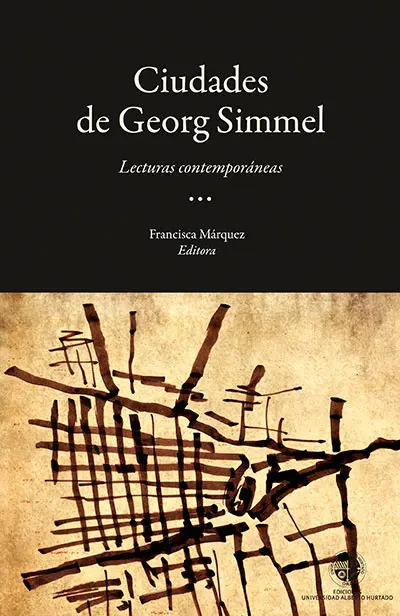
The Cities of Georg Simmel

Georg Simmel was the first sociologist of modernity and the metropolis. An essayist, philosopher, and sociologist, he traversed and breathed the air of his time like no other. He was a traveler and walker of European cities, their churches and museums, their hills and vineyards, their citadels and fortresses, their ruins, their canals and barges. The delight of modernity lay precisely in the simultaneity and diversity of possibilities it offered to the ever-surprised urban dweller. Simmel makes the great city the site of a foundational social experience.

Sharing my faith

Father Fernando Montes is recognized by the Christian community as a priest who conveys the message of faith in a direct and approachable way, managing to touch people's minds and souls emotionally. This book brings together some of the homilies he has given in recent years at the Padre Hurtado and Juanita de los Andes schools. As the author himself suggests, this is not a book to be read in a specific order or straight through, but rather an open invitation to enter it at any time of day, whenever there is a need for a space for reflection, for an intimate dialogue; reading that can be done aloud or silently, reading to be enjoyed shared or alone.

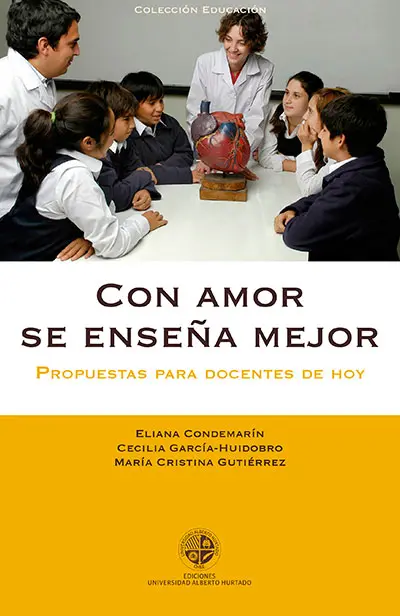
Love teaches best.

This text is born from the authors' vast experience and bibliographical research that has guided their work over many years. The book encourages and motivates teachers to review their pedagogical practices for effective classroom performance, emphasizing the human and ethical aspects without neglecting the quality and quantity of content, methodologies, and learning. It describes the qualities of a good teacher and how to embody them so that children and young people perceive and appreciate them. The connection between school and parents is also important, as is the exchange and strengthening among teachers who recognize a common vocation.

Credibility of Christianity

Thinking about faith within the context of one's own cultural environment is not a luxury that can be left to a few specialists, but a requirement of all believing experiences. The author, a recognized Chilean theologian, embarks on this path by addressing various aspects of belief in relation to current socio-cultural conditions. Why think about faith? Is it reasonable for a believer who is also modern? What kind of language can make the image of God more transparent and the voice of the Church more credible today? Does Christianity have anything relevant to say about everyday and decisive issues like happiness, freedom, and death?

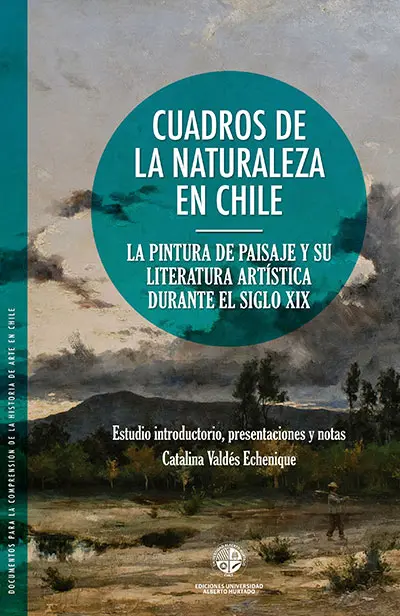
Paintings of nature in Chile

The landscape is not just the representation of a place: time is also present in it, and for this reason, history.

This anthology seeks to contribute to the recovery of the historical dimension of landscape by addressing, from the field of 19th-century art history, the links between art, science, and ideology. It thereby proposes a notion of landscape as the result of a dynamic combination of practices, perceptions, and visual constructions in which our understanding of our surroundings and our place within them is at stake.

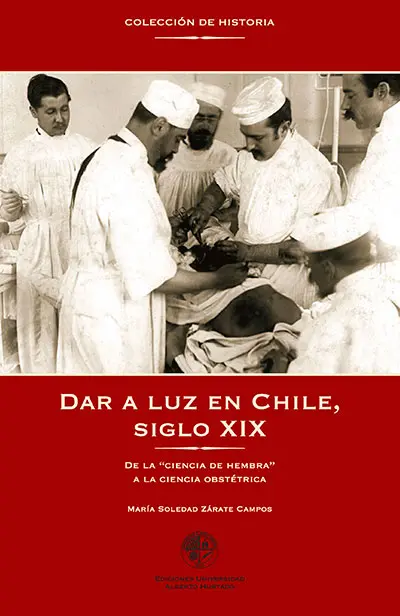
Giving Birth in Chile, 19th Century

Who, how, and where women were assisted at the moment of giving birth in nineteenth-century Chile are the central questions of this study. At the time, healthcare assistance during childbirth became a growing social and medical concern that inspired two parallel and gradual transformations: the increase in scientific control over childbirth and the reduction of the influence of folkloric aspects and popular medical practices linked to it. By examining childbirth assistance, this study contributes to a comprehensive understanding of a social event of substantive implication not only for the female population but for Chilean society as a whole.