'

Search Results for:

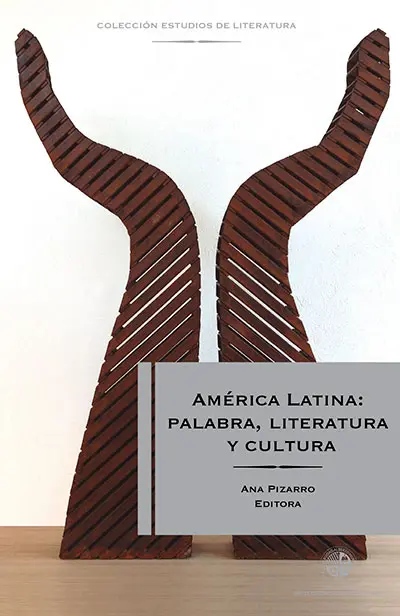
Latin America: Word, Literature, and Culture

The consideration of Latin America as a region of common historical and cultural significations, as well as the articulation of the heterogeneous within a global structure that has historically integrated areas, has been a common hypothesis from the beginning of this work. By virtue of this hypothesis, we have presented here the expression of Brazilian literature through the collaboration of its researchers, alongside that of Spanish America and the Caribbean, from a historical perspective of the construction of the continent's literary and cultural discourse.

They write: Ana Pizarro, Jorge Schwartz, Noé Jitrik, Hugo J. Verani, Saúl Yurkievich, José Paulo Paes, Adolfo Colombres, Martin Lienhard, Eduardo P. Archetti, Juan Gustavo Cobo Borda, Federico Schopf, Grinor Rojo, Joaquim Alves de Aguiar, Iná Camargo Costa, Augusto Massi, Benedito Nunes, Iumna Maria Simon, Jorge Ruffinelli, Saúl Sosnowski, Vagner Camilo, Vilma Arêas, Davi Arrigucci Jr., Mabel Moraña, Maximilien Laroche, Emilio Jorge Rodríguez, Rubén Bareiro Saguier, Lauro Flores, Margo Glantz, Osvaldo Pellettieri, Agustín Martínez, José Guilherme Merquior.
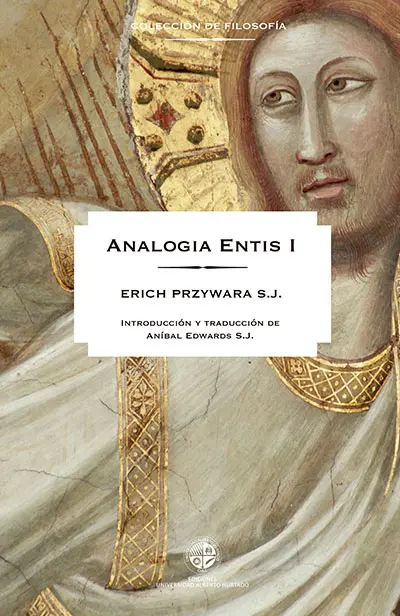
Analogy of Being I

From where and how is it viable to assert with validity, absolute objective truth? This metaphysics addresses both fundamental questions to configure a metaphysics on a scientific level. Thus, it reworks its hermeneutics of personal individuality (Simmel, Troeltsch) mentioned in Religionsbegründung (1923). The longest paragraph, dedicated to Thomas, portrays the personal legacy of the Aquinas from the 20th century. Thus, it tacitly confirms the historical patristic consensus before ancient thinkers, codified in the idea of analogia entis mentioned in his 1923 book.
Erich Przywara SJ. completed his novitiate from 1908 to 1910. Between 1910 and 1921, he pursued the usual studies in his order in the fields of theology and philosophy, with a period of teaching music at the Stella Matutina school in Feldkirch. He was ordained a priest in 1920. From 1922 to 1941, he was a member of the editorial board of the Jesuit journal Stimmen der Zeit in Munich until the journal was shut down by the Nazi regime. During World War II, he focused on pastoral care for individuals, later retiring to Hagen bei Murnau, where he wrote the remainder of his work.
Aníbal Edwards Errázuriz S.J. Born in Santiago, Chile, in 1936. He completed his studies in Classical Humanities at Colegio Loyola of the Society of Jesus (current commune of Padre Hurtado) and earned his Licentiate in Philosophy and Theology at the Jesuit faculties of San Miguel (Argentina). He subsequently pursued postgraduate studies in philosophy and theology at Ludwig Maximilian University, Munich, Germany. His academic work has been primarily concentrated at the Catholic University of Chile and the Major Pontifical Seminary of Santiago. He is a member of the Chilean Society of Philosophy. He contributes studies in his specialty to the Revista de Filosofía, Teología y Vida, and Revista Universitaria.

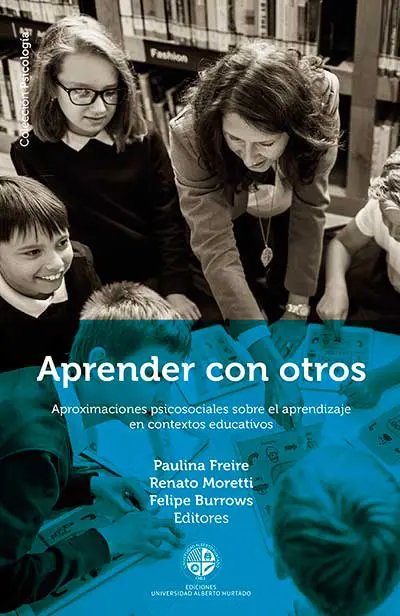
Learning with others

What do we understand by school learning and how can it be promoted? How does school learning relate to cultural, historical, and institutional processes? This book seeks to contribute to reflection, analysis, and debate on these types of questions. It is a work that embraces and brings into dialogue diverse academic contributions characterized by a common denominator: the recognition of the psychosocial nature of learning.

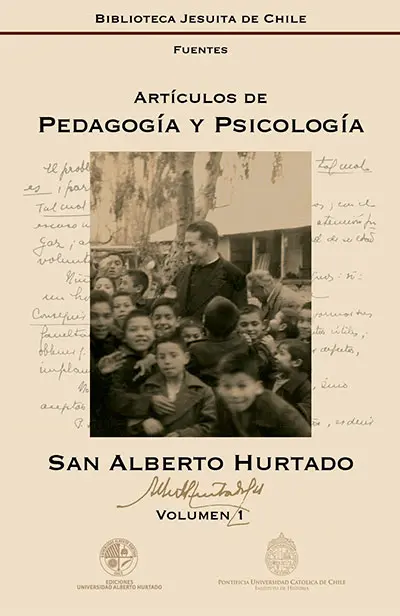
Pedagogy and Psychology Articles

In the words of Cristián Cox: “We don't associate Father Hurtado with education. This is a paradox considering he was one of the first doctorates in education in the country and that from the late 1930s he presented a well-founded and radical critique, as well as a proposal for renewal, of the schemes that governed the educational thought and practices of his time. He had education “very much in sight” for a significant part of his life. We are very far from a basic education system that left 40 percent of the country's children outside its classrooms, and from the Pedagogy School of the 1940s, which trained teachers only for Catholic secondary schools. Another world, and yet, from so many points of view, the same dilemmas and questions.”.

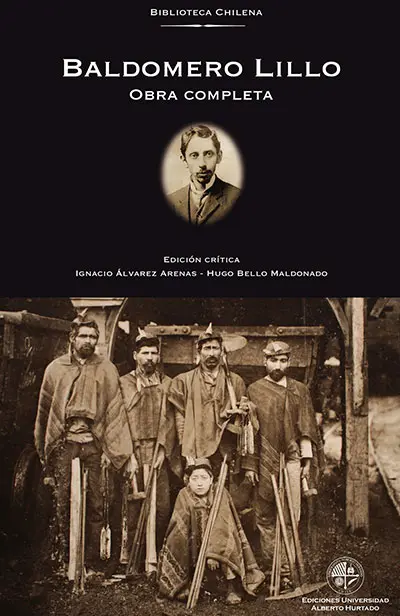
Baldomero Lillo – Complete Works

In the Chilean Library collection, fundamental works of the Chilean tradition are published according to certain criteria: they are editions prepared by academic specialists in literature in which all existing versions are compared.
Baldomero Lillo's volume includes all his works, in addition to the short story “El bofetón”, discovered in 1984 but never before published with his collected works; the third part of the short story “Mis vecinos”, also discovered in 1984 and until now published in truncated form; [and] an early version of the short story “Sobre el abismo”, discovered in this research.

Baldomero Lillo

The great Chilean writer was born in Lota in 1867, and worked for several years as a clerk in the company stores “La quincena” and “Buen retiro,” in the Arauco mining basin. In 1898, he moved to Santiago, and six years later he published Sub terra, the chilling portrayal of the miserable living conditions suffered by coal miners. In 1907, Sub sole appeared, a volume gathering his stories published in the press. A regular contributor to Zig-Zag and El Mercurio, and a minor official at the University of Chile, he died in San Bernardo on September 10, 1923.

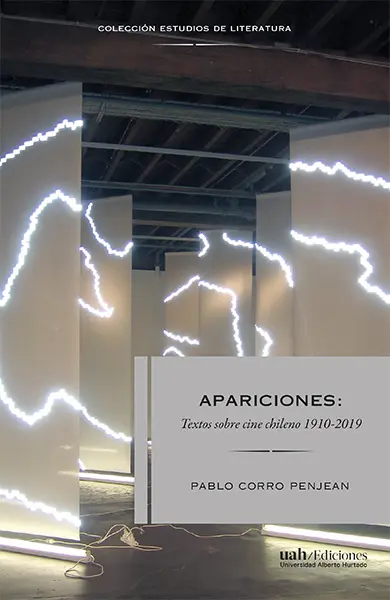
Appearances

This ambitious collection of essays offers a provocative reading of Chilean cinema, addressing over a hundred years of national production. Rich in absolutely unexpected, at times openly scandalous, associations, Apariciones brings into dialogue institutional documentaries from the beginning of the century with the so-called “newest Chilean cinema,” passing through city symphonies and the most recent post-dictatorship documentaries. In his writing, Pablo Corro shatters the dominant temporalities, categories, and disciplines within the field. Productively intertwining philosophy, history, literature, and moving image studies, the author's learned gaze makes this book one of the most important interventions in film studies in Chile in recent times.

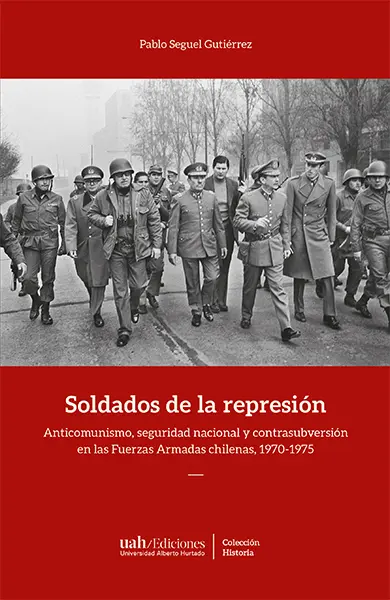
Soldiers of repression

Due to the lack of a defined action program, the military-warfare factor unified the Military Junta and the intensification of the counter-subversive war gave historical meaning to the coup d'état by the Armed Forces and police. That factor led to an internal consolidation within these forces regarding the need to more effectively confront the “war against subversion” in October and November of 1973. This repressive turn, rather than a break with counter-subversive rationality, is the materialization of that rationality in a different war scenario that conditioned the possibility of carrying out the dirty war the Military Junta needed to give itself historical coherence and purpose.