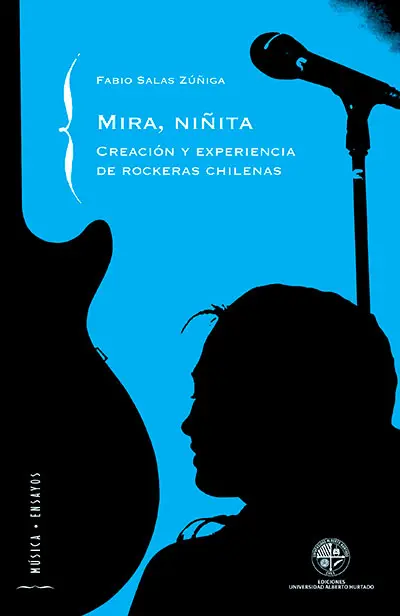
The question this book faces is about what makes the presence of women in rock particular. Is it possible to make rock from the condition of being a woman? What would the difference consist of, in expressive, content, and aesthetic terms? This has already been addressed in literature, both by the search for the feminine in writing and by the definition of female literary genres. This book offers a critical look at the history of Chilean rock women. A marginal and divergent history, but one that is ours and has been pending until now. In this way, the text is inserted into the growing concern for the role of women in Chilean music, taking the debate into the sphere of rock.
Search Results for:
The essays gathered here, despite their particular theoretical perspectives and diverse approaches in their analyses, agree in addressing certain fundamental problems linked to the representation of extreme violence, such as the conditions of production, the formal mechanisms adopted in writing, the effects on the recipient, or the interference in the social sphere caused by literary texts when articulating political violence, memory, representation, and justice.
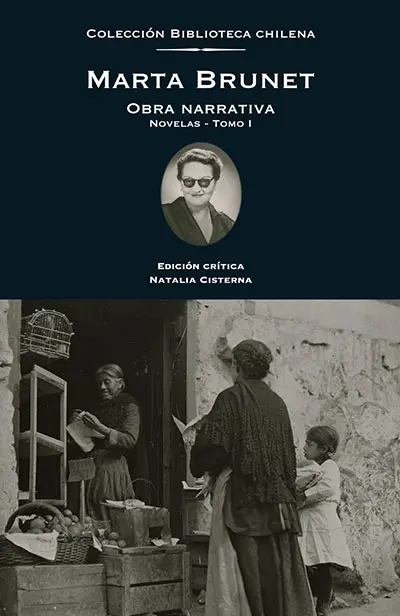
This volume brings together the complete novels of Marta Brunet, winner of the National Literature Prize in 1961. The Chilean Library collection publishes a series of significant works for Chilean literary tradition in new editions curated by a group of academics specializing in literature. Each volume presents a stable and rigorous text, provides extensive annotations, and offers a set of supplementary materials that ensure an informed reception by the public.
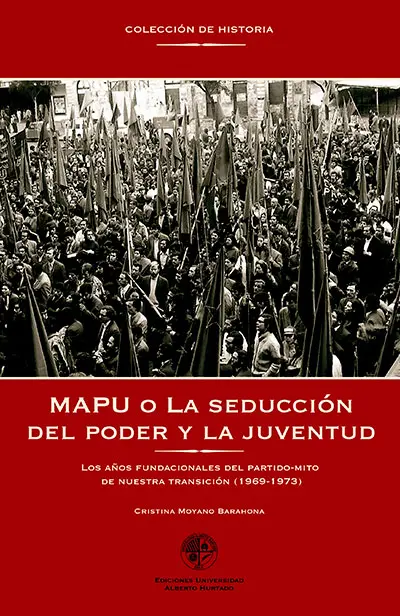
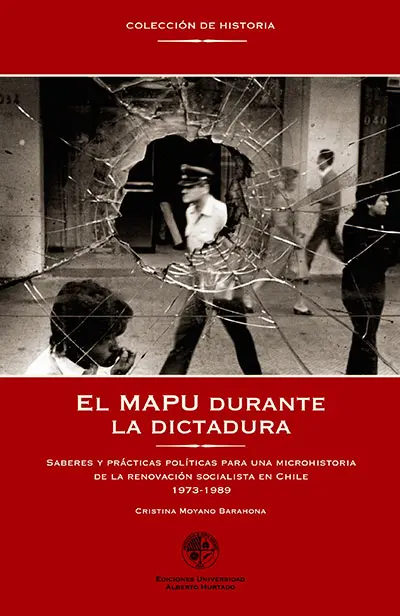
The MAPU was a small political party born in the late sixties from Christian Democratic youth, which split in 1972 and completely disintegrated in the mid-eighties. This text brings together historical information and compiles a large number of testimonies from people, many of whom not only experienced MAPU from its genesis, but also acquired new strength when it came to renewing leftist thought and building the intellectual framework upon which the transition was subsequently sustained.
Did MAPU die on September 11, 2005, as Eugenio Tironi stated? Was its death finalized 16 years earlier, when the party legally disappeared? Was this a political party according to standard parameters? What accounts for its persistence in contemporary political discourse? Why is the transition to democracy in Chile incomprehensible without it? These are some of the questions that give rise to this exhaustive research, which seeks to uncover some of the characteristics of this organization that became one of the most interesting political phenomena in our recent history. Cristina Moyano is a historian and published MAPU o la seducción del poder y la juventud – los años fundacionales del partido-mito de nuestra transición (1969-1973) [MAPU or the Seduction of Power and Youth – The Foundational Years of the Mythical Party of Our Transition (1969-1973)], Ediciones Universidad Alberto Hurtado, 2009.
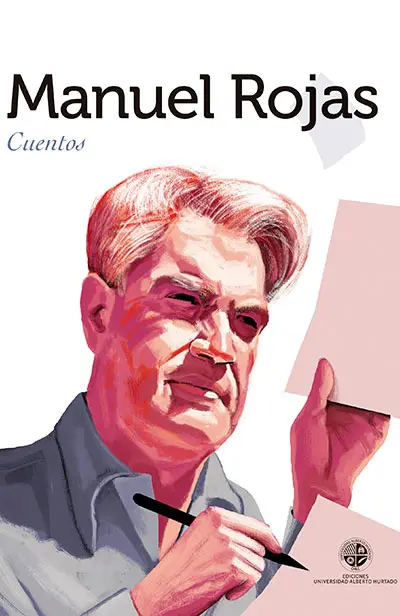
In the short stories of Manuel Rojas, we witness the gestation of his literary project and the initial display of his maturity. Of the 32 stories he published during his lifetime, in fact, 28 appeared between the ages of 26 and 35. Cuentos brings together the broad collection of stories that Manuel Rojas chose to include in a volume published by the Sudamericana publishing house in Buenos Aires in 1970, three years before his death. On that occasion, he thoroughly revised these texts, extensively corrected them, and specially wrote the essay “I Speak of My Stories” as an introduction. More than forty years later, Cuentos is published for the first time in Chile. It undoubtedly represents Manuel Rojas's legacy in the short story genre.
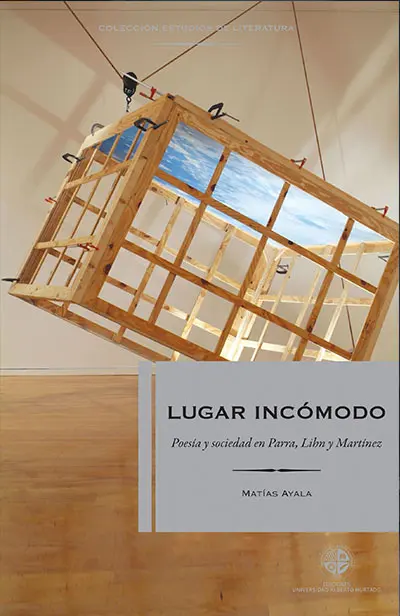
It is well known that the relationship between poetry and society in modernity has not been satisfactory; rather, a reasoned and constant disagreement has prevailed, going through tense periods of romantic reconciliation and individualist separation, and violent censorship or nationalist co-optation. This book is structured around this uncomfortable relationship between poetry and society in three Chilean authors: Nicanor Parra (1914), Enrique Lihn (1929-1988), and Juan Luis Martínez (1942-1993). Their works constitute a critical triad in Chilean poetry that has not only influenced later generations but has also changed the way national literature is understood and, perhaps, also the way society itself is read.
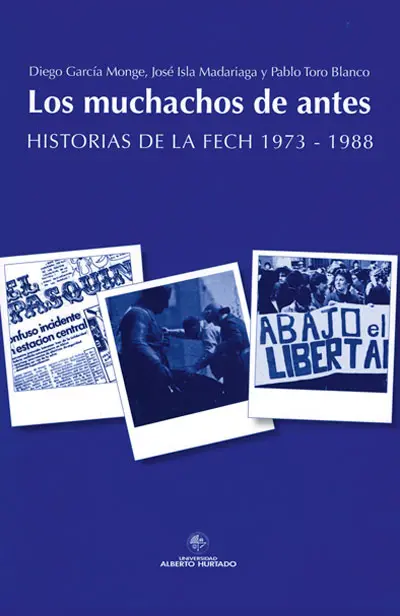
in plural and lowercase, these “FECH Stories” contain the narration of the experiences of young people from the University of Chile during the years of the military dictatorship. From the apparent immobility of the written source—laws, regulations, solemn speeches, but also semi-clandestine pamphlets—to the fluid orality of the protagonists in retrospective reflection, all these voices converge in the formation of a braid whose meaning remains open and to be elucidated from our present.
The four texts presented in this volume are fundamental to understanding the stimulating dispute between defenders and detractors of the viceregal world that occurred between the late 19th and early 20th centuries. This dispute culminated in the dismantling of liberal and republican interest in the culture of the Colony. It was during these years that the idea, still dominant today in more conservative historiography, took shape: that Chile never truly had a colonial culture or Baroque art that, from its peripheral position, could confront the originality of models produced in European and Latin American art centers.
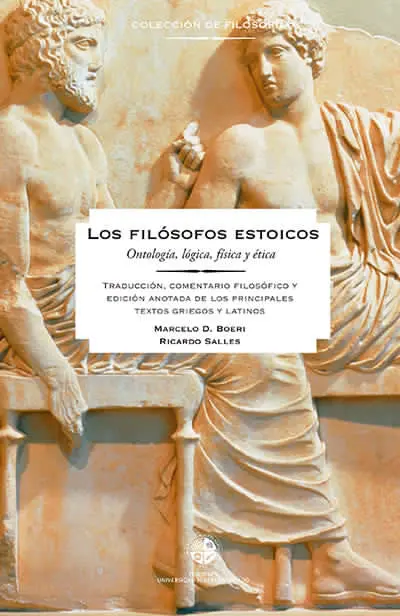
The ancient and middle Stoics share with the Presocratics the misfortune that their works have been lost. However, there is an enormous amount of fragments and reports that have come down to us through philosophers and writers contemporary with or later than the Stoics. This book offers an extensive selection of this textual evidence in connection with ancient and middle Stoicism. Some significant passages from Seneca, Musonius Rufus, Epictetus, and Marcus Aurelius are also included.