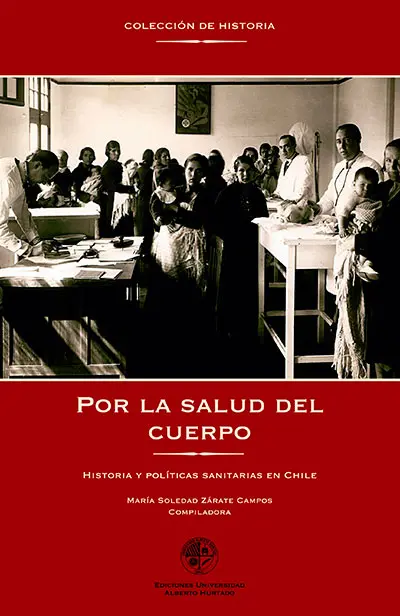
By reviewing medical body care and state intervention in the sanitary field of contemporary Chile, this compilation contributes to understanding the connection between illnesses, reproduction, bodily forms, social class, sexual difference, and gender attributions that have nurtured multiple interpretations still alive in popular culture and medical culture. But it also introduces us to the history of a facet of the Latin American civilizing project that addresses, and at times is obsessed with, the absence of hygiene and the campaigns that promoted it, with the education of the senses and instincts, and with the role of consciousness and will in mastering the body and its appetites.
Search Results for:
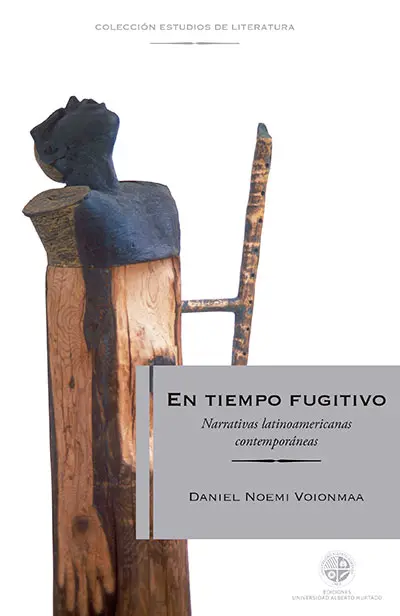
Through multiple avenues, based on an astonishingly extensive corpus, the author attempts to capture the “fleeting time” of the present, faster than ever in our history, addressing the cultural and verbal landscape of recent years to offer us a critical description of current trends in Chile and other countries. His pages leave the impression that, in more than a few contemporary writers, an absorbing interest in the moment hinders or prevents them from looking further. The critic's penetrating analysis, always innovative, often audacious, will undoubtedly stimulate the imagination and intellect of readers.
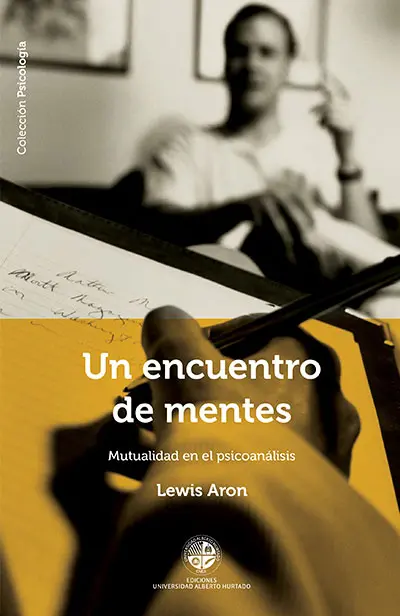
After a summary of the essence of relational theory, the formation of the relational orientation and how it was influenced by a number of extra-analytic social and cultural forces is documented. Relational psychoanalysis is not a unified or integrated school of thought; it does not possess a singular theoretical stance but rather refers to a diverse group of theories that focus on personal, intrapersonal, and interpersonal relationships. The emphasis on the relational dimensions of development and treatment cuts across all contemporary schools of psychoanalysis.
Translation of Tita Szmulewicz
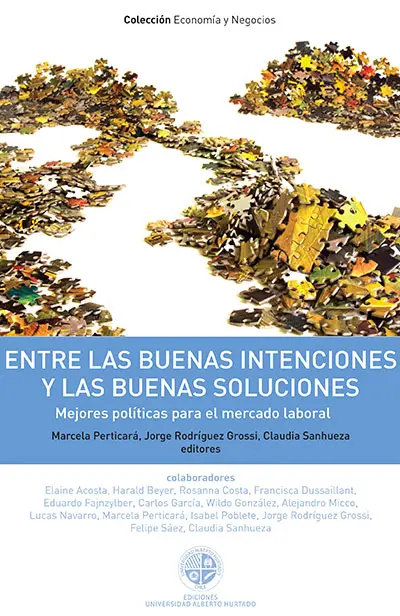
The primary objective of this book is to address various topics of the Chilean labor market, bringing together several authors from a broad spectrum of thought, in order to generate debate and reflection on the aspects of a topic so sensitive and close to people and institutions. Some of the topics discussed and submitted for reflection are collective bargaining, minimum wage, maternity leave and childcare, severance pay and wage rigidity, unemployment insurance, and regulations surrounding the workday. A book that will allow the nuances of our labor reality to be analyzed from different angles and perspectives.
Contributors:
Elaine Acosta, Harald Beyer, Rosanna Costa, Francisca Dussaillant, Eduardo Fajnzylber, Carlos J. García, Wildo González, Alejandro Micco, Lucas Navarro, Marcela Perticará, Isabel Poblete, Jorge Rodríguez, Felipe Sáez, Claudia Sanhueza
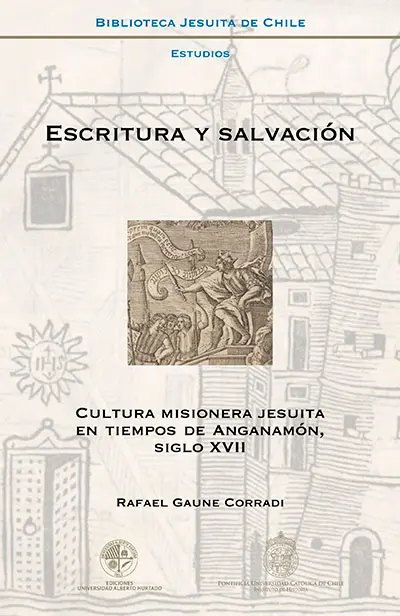
The human adventure that the author presents to us, the people they bring closer to us, the concerns that are latent or explicit in the conflicts of a distant time that becomes present, are proof of this young historian's capacity for understanding and the rigor of their analysis. With very keen sensitivity and a great capacity for empathy, facing the challenge of understanding a world that is in certain aspects strange, yet becomes familiar through study and interest in humanity, the author makes Anganamón our contemporary, bringing them back to life at a time when the Mapuche conflict is constantly discussed in Chile.
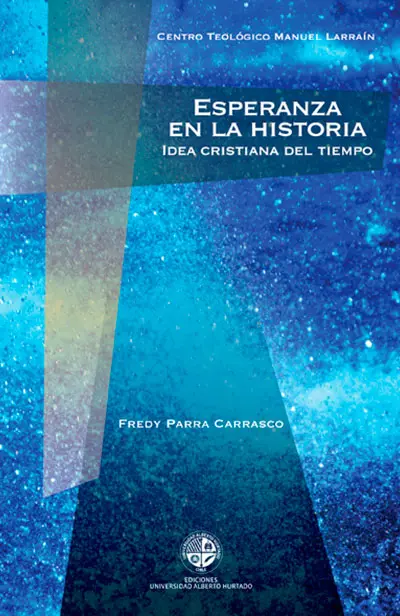
In this book, we want to turn our gaze to our current experience of temporality, to reflect on history, human waiting, and Christian hope, to analyze their anthropological and theological foundations, their relationships and tensions, their difficulties and advances, their conditions of possibility, openness, and communication. It cannot be denied that diverse perspectives currently coexist on the complex present time we are living and interpreting. A current of hopelessness, resignation, and skepticism is observed in large segments of our society, particularly among intellectuals of various stripes. But there are powerful reasons to avoid reducing human time to a pure and solitary present: there is too much accumulated tragedy, too much early and unjust death. In truth, history remains the place of waiting, as long as human consciousness does not give up imagining the future and designing better days for all.
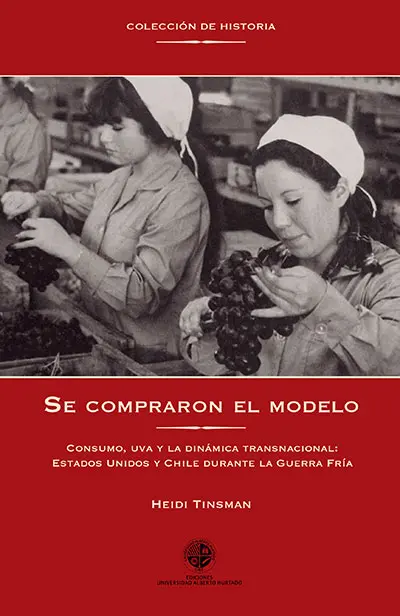
It is an investigation focused on how the production and export of Chilean grapes created new modes of consumption and labor policies in both Chile and the United States. Heidi Tinsman shows that the roots of the “miracle” of the fruit export boom under Augusto Pinochet's dictatorship were deeper and lie in the prolonged interaction between Chile and California throughout the 20th century.
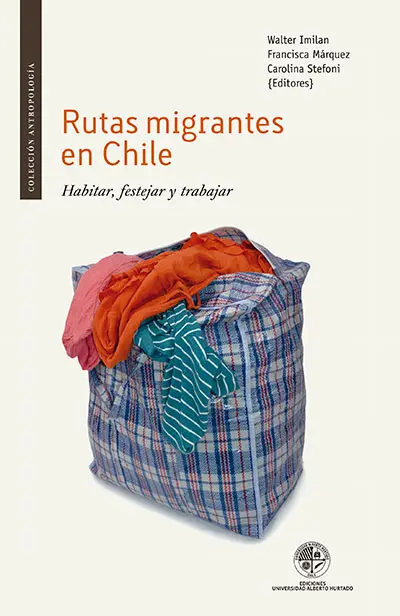
Living, celebrating, and working: these are the practices through which migrants build the complex routes of rootedness in our cities. This book brings together texts that investigate, through observation and listening, these processes of construction—sometimes painful and sometimes joyful—of migrant identities. Migration is always a cross-border movement, driving populations to recreate their identity affiliations. And we say recreation not in the sense of reproducing something already existing, but in the sense of creating anew, as an active exercise from which the new emerges.
In the words of Father Alberto Hurtado: “One of the chapters of moral formation, unfortunately neglected until now, is that of our social responsibility. We must think that upon receiving more gifts than our fellow men in talent, fortune, formation, we have a double responsibility: personal and social. (...). The parable of the talents is the parable of responsibility”. Inspired by his words, extensive research regarding CSR has been generated: “Whoever has a social sense understands perfectly that all their actions have repercussions on other men, that they produce joy and pain for them and understands, therefore, the solemn value of the least of their acts”.
This book, intended to rethink how we can relate to each other in a humanizing way and how to escape the dead end of purely objectifying relationships, expresses in accessible secular language for the Latin American reader interested in socio-political issues, reflections and convictions that have their ultimate foundation and keystone in Christian theology.