'

Search Results for:

Politics and religion

Would the world be a better place if religion were removed from public discourse? In response to the affirmative answer given by secularists, Miguel Yaksic embarks on a deep and stimulating dialogue. He also discusses a growing neo-traditionalist trend in the Church that thinks the more secularized the world becomes, the more a clear and distinctive Catholic identity is needed; as if the Church had to withdraw from the world, returning to the sacristy. Both trends overlook what the author calls the irreducibly political character of the Christian faith. It is precisely the poor—those who are neither secularists nor neo-traditionalists—who need to continue believing in the public nature of Christian hope: the liberating promises of the God of Abraham and of Jesus Christ.
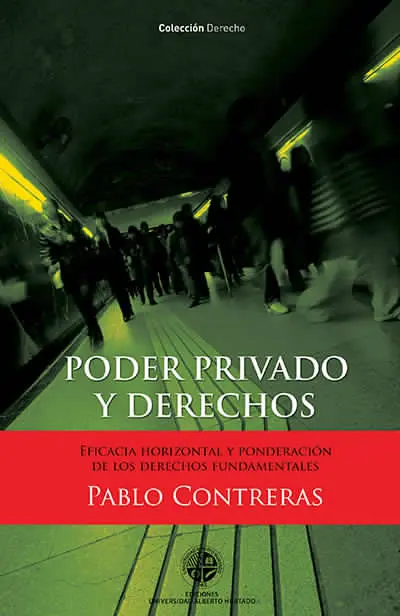
Private power and rights

Who are fundamental rights binding upon? The question seems, at first glance, simple to answer. Fundamental rights – that is, certain subjective positions guaranteed by law at the constitutional level – should be understood minimally as a sphere of protection against interventions or aggressions by any agent. That is, fundamental rights protect the individual from any intrusion, regardless of its origin. This, which is recognized as a theoretical matter of importance, at the same time represents an issue with profound practical implications.

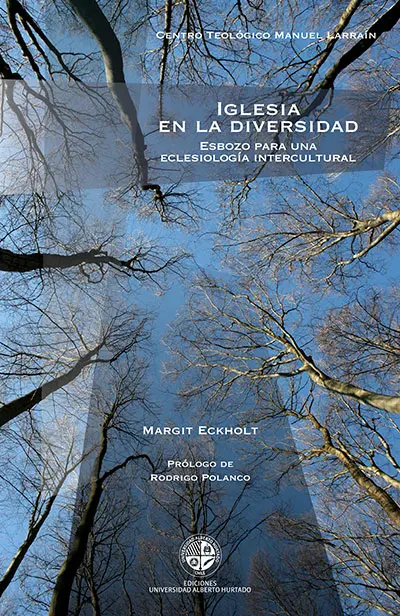
Church in diversity

El papa Francisco habla de una “Iglesia en salida”: “La salida misionera es el paradigma de toda obra de la Iglesia”. Ella “siempre tiene la dinámica del éxodo y del don, del salir de sí, del caminar y sembrar siempre de nuevo, siempre más allá”. Un descentrarse, en oposición a todo ensimismamiento, para centrarse más bien en la Palabra viva de Dios, en Jesucristo, que constituye la motivación central de una evangelización puesta al servicio de una nueva manera de ser Iglesia.

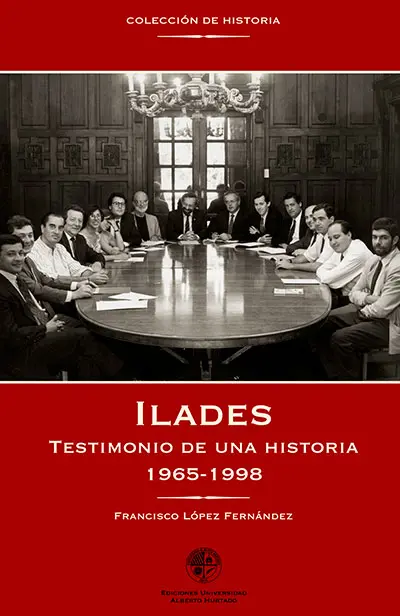
ILADES. Testimony of a History 1965-1998

When it seemed like madness to build an academic community of people with their differences and diverse traditions, Ilades sought to be a group of professionals who were open and in dialogue. This is a journey through the memory of this human group driven by the need to build a community of thought and service founded on two inspiring contributions: the centuries-old tradition of social Catholicism and the Latin American character of our historical destiny.

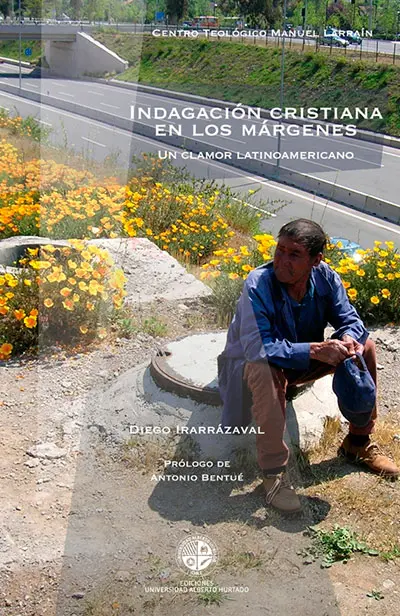
Christian Inquiry on the Margins

The 26 chapters of this book collect research on associations and programs of the Church concerned with the well-being of humanity. They are fruits cultivated in fragile and wise communities (in southern Peru and now in a Chilean city), as well as in congresses, publications, and international endeavors. Ordinary events and contact between different people allow us to discover the voices and silences of God. This leads to taking distance from contemporary idolatries.

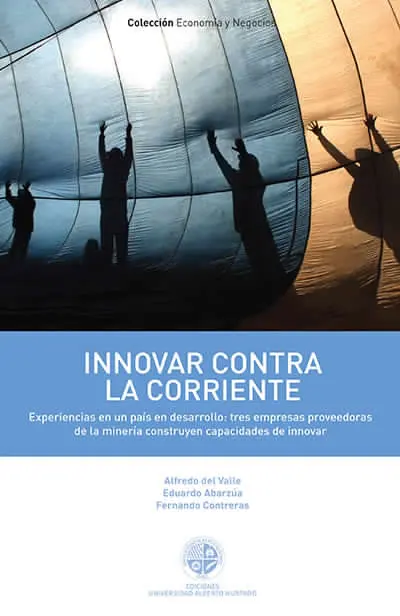
Innovate against the current

This book presents a unique experience regarding the development of innovation capabilities in three Chilean companies—ARA WorleyParsons, Drillco Tools, and Enaex Servicios—which was carried out in conjunction with the Universidad Alberto Hurtado.
“In the Panel's view, the most urgent and difficult problem to address is changing companies” innovative behavior and increasing their innovation capacity. This involves not only technological capabilities but also management, marketing, network integration, and others.
International Panel, chaired by Professor Morris Teubal,
The Chilean National Innovation Strategy, 200

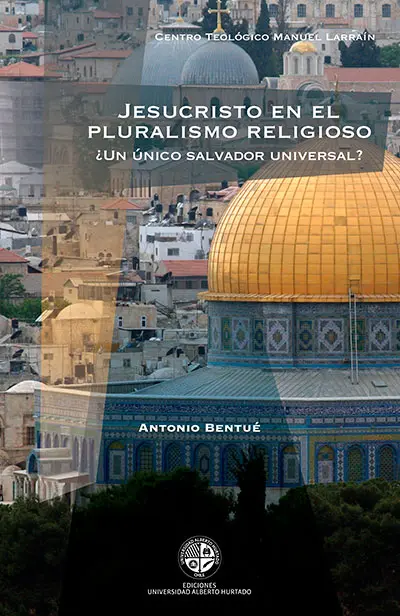
Jesus Christ in Religious Pluralism

In the current context characterized by growing religious and cultural pluralism, the book addresses the issue through a historical journey regarding the reasonableness and meaning of such a universal claim. The question is of the utmost urgency in Western society due to the instinctive rejection, typical of postmodernity, of accepting absolute axiological principles. It is to this work's credit that it traces some significant stages of the Church in Latin America where both lights and shadows are perceived. While it is true that examples of evangelization accompanied by violence are not lacking, as the author shows, one can also verify the effort of others who advanced belief reflection in the right direction, in accordance with the Gospel and human dignity.

Residents

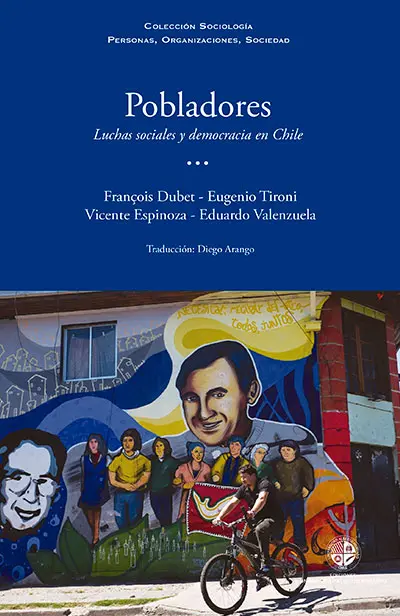
The text analyzes the logics that guide the action of the shantytown dwellers, provides us with an overview of the social and political landscape of the nineteen-eighties, and plunges us into the dawn of the democratic transition. Some conclusions drawn from this book can be very useful for understanding the action of the shantytown dwellers today. If in the eighties sacrifice was valued as a moral boundary between the poor and the middle class, today effort operates, the content of which is similar but less tied to the Catholic religion. Likewise, in the analysis of the logic of revolutionary rupture, socialism appears directly as a form of organization alternative to capitalism, whereas today the anti-neoliberal or anti-capitalist stance precedes the definition of a positive horizon.

Populations on the move

This volume offers an exploration that spans from the metropolises of the Southern Cone to Mexico and Madrid, attempting to understand the role of routes, dislocations, and re-territorializations in contemporary society. From there, evidence emerges that strains the mechanisms and assumptions through which culture and ethnography have been conceived, with a special focus on the movement of people, objects, and imaginaries within a global context of capitalist expansion, which in no way has managed to dilute the ethnic on the systemic plain, nor has it erased the necessary social embedding in the face of economic fantasy.

Philosophy and solidarity

This book brings together diverse philosophical studies of clear relevance, linked in the task of illuminating paths for the strengthening and expansion of solidarity in contemporary society. The gathering of authors such as Apel, Rawls, Ricoeur, Lévinas, Dussel, Derrida, Rorty, and Van Parijs, studied from the perspective of their contribution to a greater understanding and more effective construction of solidarity, was until now an unprecedented and indispensable effort. Aimed at those interested in the possible contribution of thought to the task of transforming and correcting the social order with a view to more solidary and equitable conditions, in this book they will find rigorous and reflective studies that will be a source of guidance and the delivery of valuable ideas for debate.