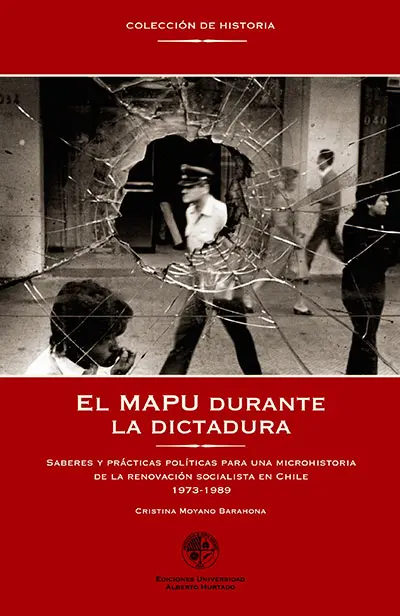
The MAPU was a small political party born in the late sixties from Christian Democratic youth, which split in 1972 and completely disintegrated in the mid-eighties. This text brings together historical information and compiles a large number of testimonies from people, many of whom not only experienced MAPU from its genesis, but also acquired new strength when it came to renewing leftist thought and building the intellectual framework upon which the transition was subsequently sustained.
Search Results for:
Did MAPU die on September 11, 2005, as Eugenio Tironi stated? Was its death finalized 16 years earlier, when the party legally disappeared? Was this a political party according to standard parameters? What accounts for its persistence in contemporary political discourse? Why is the transition to democracy in Chile incomprehensible without it? These are some of the questions that give rise to this exhaustive research, which seeks to uncover some of the characteristics of this organization that became one of the most interesting political phenomena in our recent history. Cristina Moyano is a historian and published MAPU o la seducción del poder y la juventud – los años fundacionales del partido-mito de nuestra transición (1969-1973) [MAPU or the Seduction of Power and Youth – The Foundational Years of the Mythical Party of Our Transition (1969-1973)], Ediciones Universidad Alberto Hurtado, 2009.
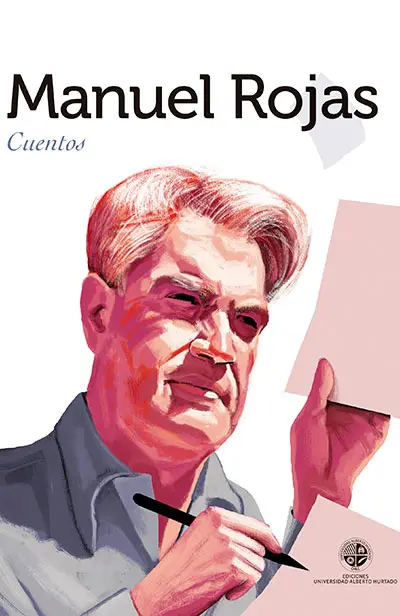
In the short stories of Manuel Rojas, we witness the gestation of his literary project and the initial display of his maturity. Of the 32 stories he published during his lifetime, in fact, 28 appeared between the ages of 26 and 35. Cuentos brings together the broad collection of stories that Manuel Rojas chose to include in a volume published by the Sudamericana publishing house in Buenos Aires in 1970, three years before his death. On that occasion, he thoroughly revised these texts, extensively corrected them, and specially wrote the essay “I Speak of My Stories” as an introduction. More than forty years later, Cuentos is published for the first time in Chile. It undoubtedly represents Manuel Rojas's legacy in the short story genre.
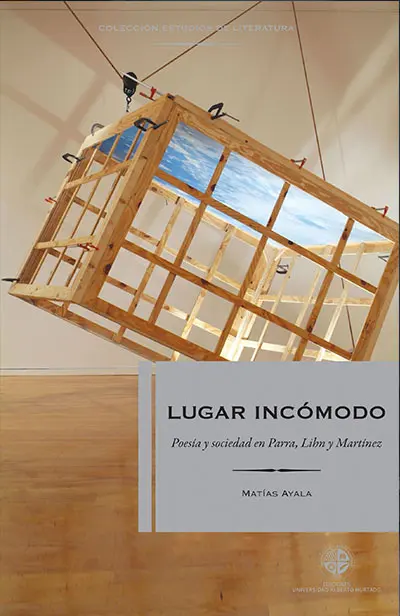
It is well known that the relationship between poetry and society in modernity has not been satisfactory; rather, a reasoned and constant disagreement has prevailed, going through tense periods of romantic reconciliation and individualist separation, and violent censorship or nationalist co-optation. This book is structured around this uncomfortable relationship between poetry and society in three Chilean authors: Nicanor Parra (1914), Enrique Lihn (1929-1988), and Juan Luis Martínez (1942-1993). Their works constitute a critical triad in Chilean poetry that has not only influenced later generations but has also changed the way national literature is understood and, perhaps, also the way society itself is read.
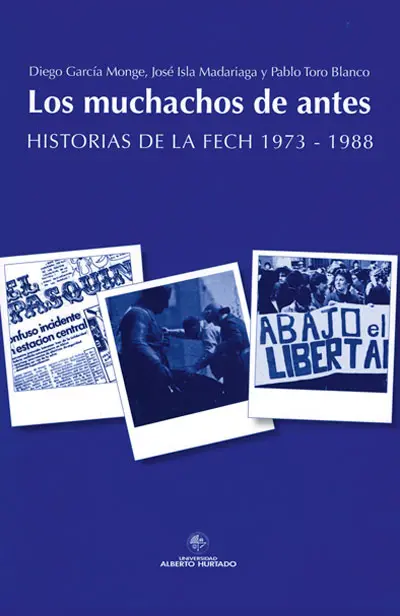
in plural and lowercase, these “FECH Stories” contain the narration of the experiences of young people from the University of Chile during the years of the military dictatorship. From the apparent immobility of the written source—laws, regulations, solemn speeches, but also semi-clandestine pamphlets—to the fluid orality of the protagonists in retrospective reflection, all these voices converge in the formation of a braid whose meaning remains open and to be elucidated from our present.
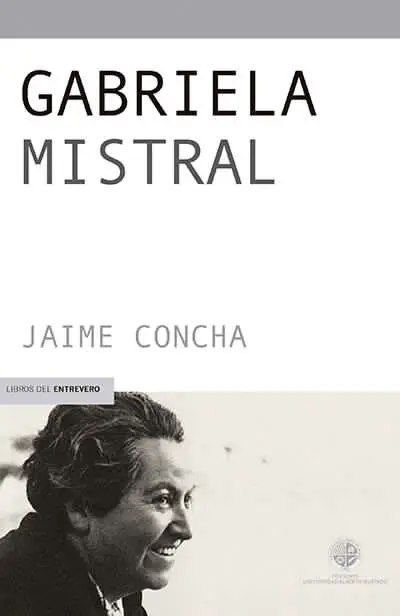
Reading Mistral – rereading her unceasingly – is to touch the experience of a land and brush against the halo and breath of poetry. Within hers, the strongest materials of the spirit gather: utopia, tragedy, the prophetic. Utopia of what was not, that ghostly round in the void; tragedies of herself and her time; the historical prophecy of dispossession of her own community. Felling, desolation, a sordid winepress are the pained substance of her poem on Chile.
At a time when the credibility of the Catholic Church is affected by so many scandals involving members of its clergy, it is good to return to the origins of the Church and rediscover there the power of its initial witness. This book looks for the reasons to believe in Jesus that are found at the origin of faith in him; to this end, it investigates the Pauline writings of the New Testament. Scripture has normative value for the faith of the Church; therefore, the reasons for believing that can be found within its pages hold particular authority for us today.
This book addresses the history of the Chilean right-wing party Unión Demócrata Independiente (UDI), and its roots in a political network articulated by members and former members of the "Movimiento Gremialista," an organization founded at the Catholic University by Jaime Guzmán during the 1960s. It is the story of that activism which, from September 1973, sought to direct the foundational orientation of the dictatorship while simultaneously consolidating its own identity and project as a sector of an emerging right-wing.
In April 1957, during the fifth year of Carlos Ibáñez del Campo's presidency, Chile was rocked by a series of social protests in reaction to an increase in urban transportation fares. The first movements occurred in Valparaíso, then spread to Concepción and Santiago, where they reached their greatest magnitude, becoming one of the most significant popular movements of the 20th century.
Incomprehensible at the time. The movement left almost all political actors without a response. Only the extremely violent reaction of the government could quell the force of the outburst.
Despite the intensity, violence, and the large number of dead and wounded, the events of 1957 did not have major institutional repercussions. Over time, these events, while remaining alive in the memory of their protagonists, fell into “historiographical oblivion.”.
In the words of Father Fernando Montes, reading this book will do much good because it helps us to reconnect with a profoundly human and incarnate Christianity and religiosity, with an undeniable social sense. I recommend a leisurely reading, taking each chapter separately and on its own merits. In this way, the repetitions, which are due to the need to get to the very roots of each topic discussed, become understandable.