'

Search Results for:

Marta Brunet – Volume 2

This volume gathers the complete short stories of Marta Brunet, National Literature Prize winner in 1961, several of them previously unpublished.

The collection Chilean Library publishes a series of significant works for Chilean literary tradition in new editions by a group of literary scholars. Each volume establishes the text with stable and rigorous criteria, provides extensive notes, and offers a set of complementary materials ensuring informed public reception. The objective is Chilean Library is to encourage the rereading, appreciation, and dissemination of fundamental authors of the national canon.
Stones, barricades, and pots and pans

This is a very necessary book. It tells the story of the mobilization experience of an entire generation that, between the years 1983 and 1986, spearheaded the social protest against the civil-military dictatorship led by Augusto Pinochet. Its pages vividly evoke the tension, the blackouts, the shouts and slogans, the smell of burning tires, the adrenaline, the rage, the organizational capacity, and the solidarity of a people who fought the dictatorship with courage and conviction. It is the story of the invisible ones of the negotiated transition.

David Hume

“It accords better with the usual wisdom of nature to secure such a necessary act of the mind by some instinct or mechanical tendency which is infallible in its operations, which can operate from the first appearance of life and thought, and which can be independent of all the laborious deductions of the understanding. Just as nature has taught us to use our organs without giving us knowledge of the muscles and nerves by which they are moved, likewise it has implanted in us an instinct that leads thought along a course that corresponds to the one it has established among external objects, even though we are ignorant of the powers or forces upon which this regular course and succession of objects entirely depends. David Hume.

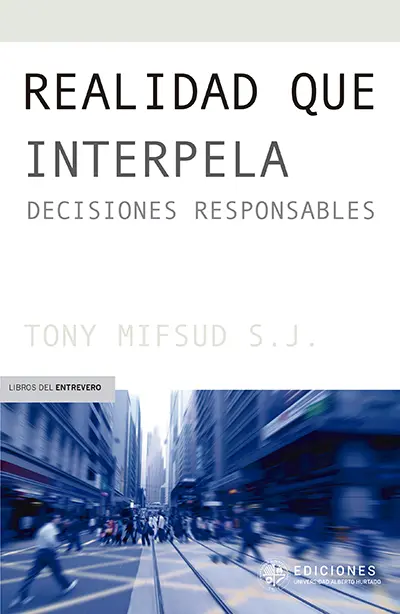
Reality that challenges

A lot is said about discernment in our days, but what exactly is it and how is it done in the field of ethics? In this writing, which is a continuation of the previous book Responsible decisions, the author continues to present current ethical themes according to the methodology of discernment: (a) What is the fact?, (b) understand it thoroughly, (c) what are the values involved?, and (d) make a corresponding decision. The author does not make a decision for the reader, but rather invites them to reflect, to establish relationships between the different facts, and finally to make their own decisions based on the presented data and the explicit values.

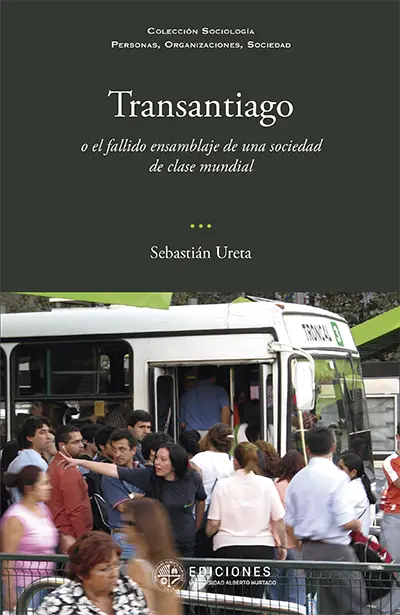
Transantiago

The exclusion of citizenship from public policy design holds a prominent place in criticisms of the State's actions in Chile. Contrary to this notion, this book argues that human beings, both individually and collectively, are always at the center of any public policy. To better understand the problems of public action, therefore, the relevant question is not why this exclusion occurs, but rather to focus on the mechanisms by which citizenship is included in public policy formulation, which we call “human devices” here.
This book develops this argument through the analysis of Transantiago, the public transportation system of the city of Santiago, Chile. From the beginning of its planning in 2000, Transantiago promised not only to end the historical problems of the city's public transportation system but also to create a “world-class” society, which would confirm the achievements of the social democratic governments in power since 1990. Contrary to these promises, the massive problems faced by Transantiago since its launch in February 2007 led to it being quickly considered a paradigmatic case of how public policy should not be implemented.
Mixing elements from Science, Technology and Society (STS) studies and governmentality theory, this book analyzes the development of Transantiago as the problematic assemblage of a series of highly heterogeneous and incoherent human devices. From this perspective, moving towards better implementation of public policies does not solely involve increasing instances of citizen participation as is usually assumed. Above and beyond these, public policies must be framed within a logic of care that replaces messianic visions with a continuous questioning regarding the origins, means, and consequences of planned intervention in the recipient population.

Reimagining public education

This book examines current educational discourses based on market logic and analyzes how they undermine the notion of “the public” in public education by allowing private visions of education to define our democratic imagination.
To facilitate this reflection, this book offers the notion of public education as something that must be publicly imagined as a conceptual instrument capable of helping us understand the need to see the educational hopes of schools in the historical and discursive contexts in which they originate and to reclaim public schools as legitimate and necessary spaces for exercising our public imagination.

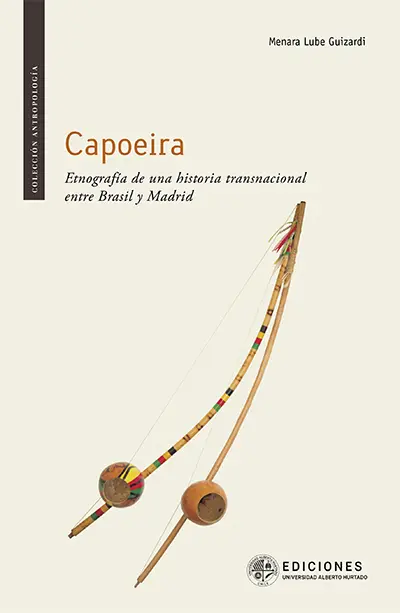
Capoeira

The touch of the berimbau has a magical power; the sound of its stiff steel string reverberating upon the impact of the wooden stick has the power to invoke the “energy” that brings the capoeira circle to life. In any corner of the planet, the sound of the berimbau's touch summons the dendê that transforms the circle into an allegory of the world; the world into a metonymy of the circle, and the capoeirista, metaphorically, into the owner of the world. And so, as it spreads in various directions, the song emanating from the instrument calls for the presence of people: it calls to those initiated in the art to come and occupy their place, to come and “close the circle.” Through the touch of the berimbau, capoeira makes its call and performs its “trip around the world.”.

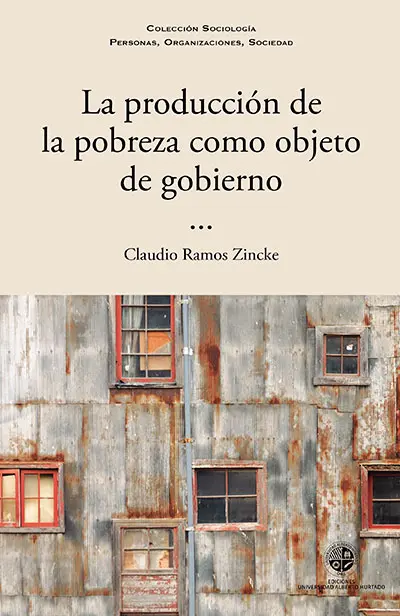
The production of poverty as an object of governance

Poverty and the poor could have been very different from what measurement instruments have shown. This book addresses an underground facet of social policies concerning poverty: the instruments and procedures for measuring it and classifying people as poor in Chile. Using interviews, ethnographic observation, data, and secondary sources, as well as abundant press material, the research reveals the multiple contingencies of poverty constructed by the State through the Casen survey and the social stratification card, over the last 35 years.

Ruling classes and uneven development

In current debates where the death of the “elite” and the collapse of the model are proclaimed, a long-term analysis—one of transnational connection and the systematic construction of a coherent project that overcomes and adapts to the most diverse crises—comes to relativize those overly enthusiastic readings that are too attentive to novelty. A class that has spent 200 years recomposing itself, reproducing itself, and directing the rest will hardly fall due to a crisis of legitimacy or a complicated economic conjuncture. Nor will it fall because of demands that seem to surpass it. In both cases, the crucial factor will be the reaction and adaptive capacity of business elites to these demands, questioning, and changing, uncertain contexts. As this book masterfully shows, class formation (not just that of the property-owning classes) is, after all, a continuous process of struggle along pathways that are not always predetermined.

The preunderstanding of the human in Luhmann's sociology

This book reveals a blind spot in Luhmann: the concept of the human behind his systems sociology, while at the same time making evident the compatibility between the contingency of the social world described by him and the openness to the world of a decentered human being proposed by philosophical anthropology. This book also offers a novel methodological way to understand theoretically, historically, and philologically the relations between sociology and philosophy: the technique of elective affinity—a way that should be of interest to those who think that philosophy has something or much to say to sociology and to anyone who assumes that sociology is more than data collection and fact description.