How can a city be designed for walking if walking itself designs the city? Combining perspectives from sociology and anthropology, as well as contributions from art, architecture, design, and journalism, Martin Tironi and Gerardo Mora show how walking subtly destabilizes and resists the organized navigability of the city. By touching surfaces, sniffing cracks, breathing air, and perceiving the light and shadows of a perpetually changing urban environment, walking undoes connection, escapes confinement, and inverts containment. In doing so, it reawakens the city.
Search Results for:
Contemporary concern for the environment has intensified over recent decades. Understood as a turn toward ecology, it also finds expression in theology, in the reflection aptly called “ecotheology.” The latter contributes to the ecological debate from its own perspective, through the recovery, critique, renewal, and deepening of religious symbols and traditions.
This book by Manuel Salas studies the formative period experienced by Father Hurtado after entering the Society of Jesus when he was already a lawyer. The fruitfulness of his later apostolic life and his prophetic openness cannot be explained without the formation received within the Society. He passed through different countries; studies in spirituality, humanism, philosophy, theology, and pedagogy broadened his vision of Christianity and the human being. Especially important was the period in Leuven where he studied Theology and obtained his doctorate in Pedagogy. That training allowed Alberto Hurtado, upon his return to Chile, to be a breath of fresh air, of hope, and of a new social vision.
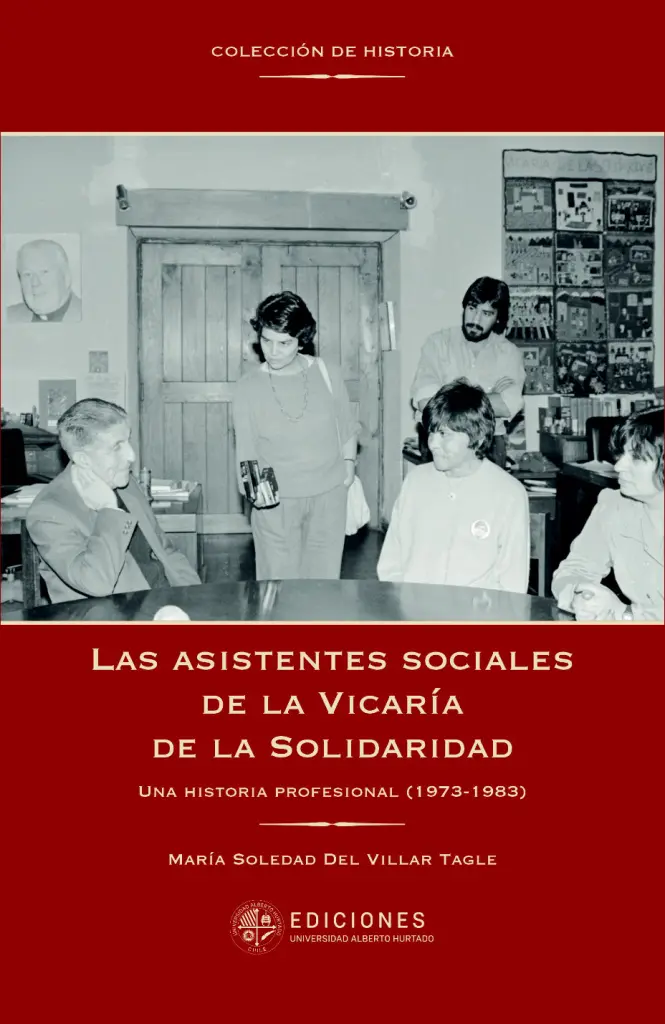
The Vicariate of Solidarity was born from the decision of Cardinal Raúl Silva Henríquez to create an institution of Christian inspiration that would extend solidarity to all victims of state violence and translate that mandate into the promotion of human rights in accordance with the dignity of every human being.
The social workers who worked there, being the first to receive the relatives of the disappeared detainees, were recognized as the visible face of the Church to the sufferers. Theirs was a professional history as well as a history of hospitality and a lay history, because the actions carried out were linked to listening, welcoming, and helping, and because the main subject in the aforementioned institutions was made up of laymen and laywomen.
Professional women, women relatives of the victims of the military government, and grassroots women as well, learned together the meaning of the parable of the good Samaritan, which became the evangelical key to this history of solidarity. This book contributes, with rigor and empathy, to the pursuit of stories and research that assist us in the essential task of memory.
Can literary criticism trace the sensitive cartography of a country, its history, morality, customs, rites, subjectivities? And can it do so starting from the autobiographical “pose”—that is, from the way in which the innumerable masks of the self take shape in writing?
That is the challenge and the gift of this book, which invites us to journey in a Borgesian fashion down paths that fork, discover new landscapes, listen to other voices, glimpse scenes against the grain, or, as that untranslatable French expression says, in a different light. Because Lorena Amaro once again performs the memorial gesture of honoring the old names, but to unread the heritage, or better, to read it, with Derrida, in the key of its transformation, in its current flash.
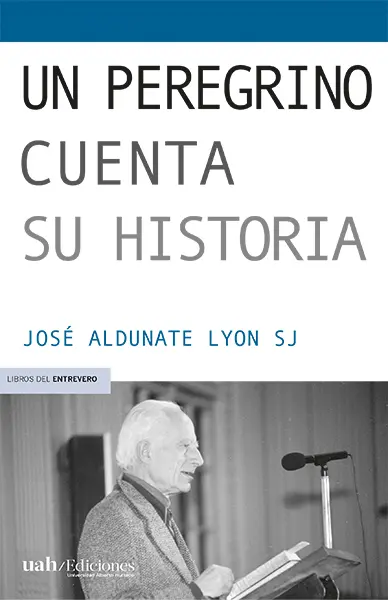
In this autobiography, Father Aldunate recounts with extreme simplicity events he experienced or witnessed from the front lines, as well as the main challenges he had to face in his life. These range from his early religious vocation to his choice to serve the working class, including his firm, courageous, and peaceful defense of human rights. These pages overflow with humility, clarity, intelligence, kindness, intellectual honesty, and above all, humanity.
The texts in this publication are not intended to promote a single model for approaching professional practice in selection, as a manual identifying unique steps, notions, and techniques. On the contrary, by identifying the spaces that create tension in professional practice, different theoretical and practical readings are proposed to allow the reader to position themselves, question, and make sense of their own daily experiences, competencies, and skills.
The university is an institution that embodies ideas and goals with which a society understands itself in different times and places. It is a social, historical, and political construct in which human interests and struggles crystallize. Therefore, it demands a permanent review and clarification of its meaning.
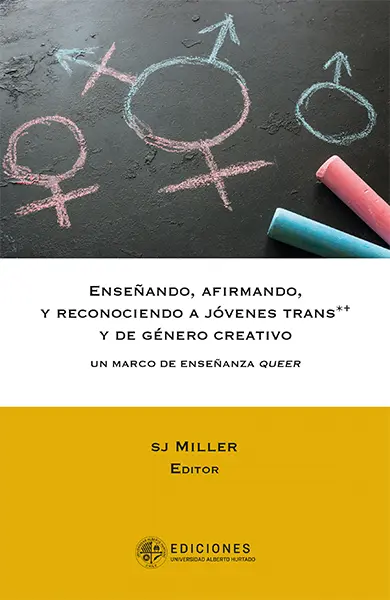
This book is based on a queer literacy framework and offers examples for teaching it from pre-K through high school. To date, there are no comprehensive texts aimed at educators and literacy theorists that can be used to demonstrate successful models in which teachers manage to affirm the differentiated bodily realities of any given gender through curricula and schooling practices.
The objective of each chapter and topic of the book is ultimately to highlight how publications of this type are capable of raising awareness among teachers regarding gender norms, and the violent and unstable social and educational climates for the millennial generation of lesbian, gay, bisexual, transgender, intersex, (some) gender, (some) sexuality, gender-creative youth, and questioning adolescents.
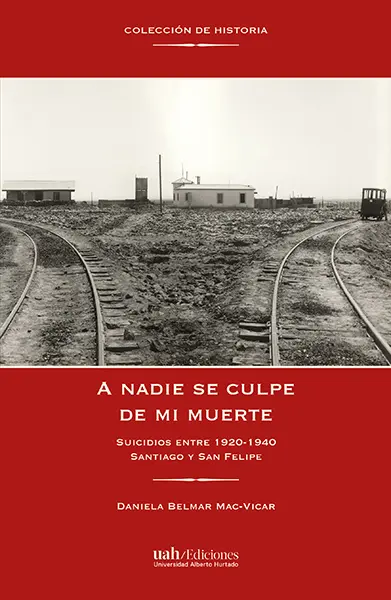
Suicide, studied in the cities of Santiago and San Felipe, between 1920 and 1940, is the methodological approach that the author has established based on certain key concepts. First, a determined time period and two cultural contexts: the city of Santiago, the most developed in the country for the period under study; and San Felipe, a semi-urban city, with a more rural economic structure and culturally more traditional than the capital. Those who killed themselves were sinners, cowards, and even criminals. As stated, the radical consequences of “to not be ”more," which immerse us in the ineffability of personal existence, can be investigated in the environment and in the suicidal subject himself, who represented himself by narrating his determination, either in writing or orally.