With its several short chapters, The Life of Lines rehearses a correspondence, akin to a collection of letters. They are not dispatches from the field, written from some distant locality that might seem strange and even exotic to those who receive them in the home country. I write about a world that we can all experience by walking on the ground during the day and observing the stars at night, by drawing lines or spinning a thread, by leading our lives together with others. I invite you to join me in this experience, and to share the many perplexing questions that emanate from it.
Those questions are of a philosophical type, but unlike our philosophers, I do not approach them by resorting to canonical texts. I insist that we can address them in the very process of living life, and that life itself is an endeavor of a fundamentally philosophical nature. And that, in turn, philosophy must be a way of being-and-staying alive. Put another way, I do my philosophy out in the open air, not inside a castle. And you can do it too. This philosophy of ours is what I mean by anthropology. To practice anthropology is to philosophize together, outside, in the world.
Search Results for:
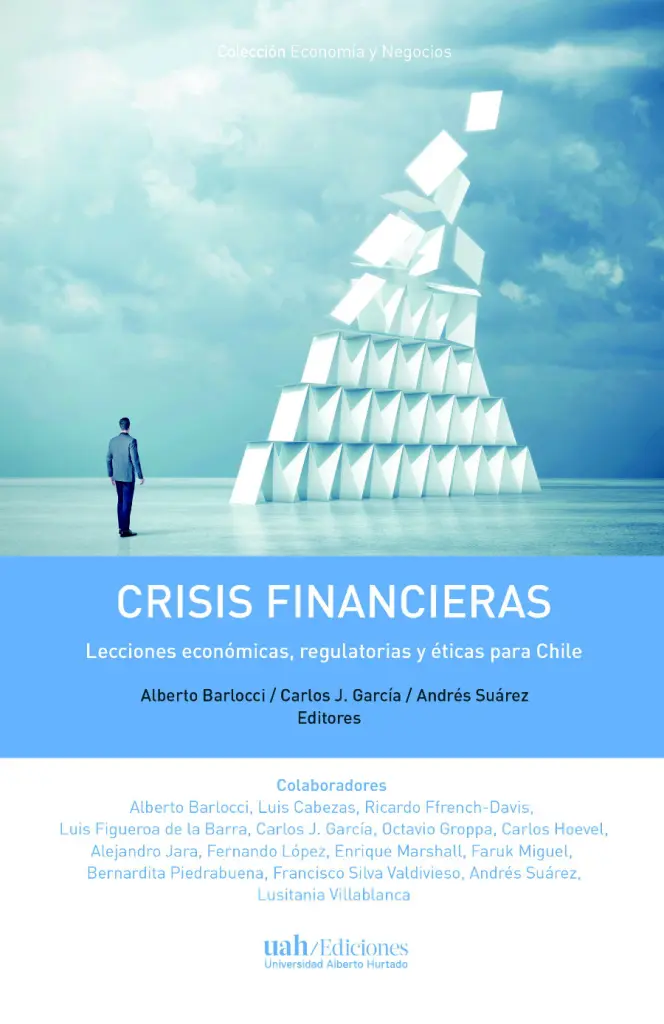
A decade after the international financial crisis, there is renewed interest in this topic worldwide, especially if the conditions that triggered this crisis have reappeared.
This book seeks to gather information on this crisis from Chile's perspective, considering three fundamental aspects: economic, regulatory, and ethical. Therefore, it is an effort of multidisciplinary reflection that aims to open spaces for dialogue on certain questions in the Chilean context, such as identifying if the conditions currently exist for financial crises to occur, or what reforms to the financial system should be made to minimize the occurrence of such crises and the need for financial education to prevent these phenomena, and also how to analyze from an ethical standpoint the responsibilities that arise from decision-making that could generate these crises.
Since 2003, the School of Journalism at Universidad Alberto Hurtado, through the Premio Periodismo de Excelencia (Excellence in Journalism Award), has recognized the best articles published in national print media during the year. With the input and debate of an independent and diverse jury, composed of journalists and academics with distinguished careers, the award seeks to recognize and encourage professional practice with the highest ethical, investigative, and writing standards. The works included in this book showcase the events that impacted 2017, such as Daniela Vega, SuperTanker, Rafael Garay, Big Data, Piñera's zombie companies, Alessia, notaries, among many other events that depict a year convulsed by news stories.
Finalists 2017
Nicolás Alonso * Álvaro Bisama * Matías Brown * Estela Cabezas * Rodrigo Fluxá * Alberto Fuguet * Arturo Galarce * Juan Andrés Guzmán * Daniel Hopenhayn * Sergio Jara * Mirko Macari * Alejandra Matus * Constanza Michelson * Benjamín Miranda * Pilar Navarrete * Tamy Palma * Claudio Pizarro * Daniel Pizarro * Natalia Ramos * Sebastián Rivas * Jorge Rojas * Jonás Romero * Juan Pablo Sallaberry * Matías Sánchez * Francisca Skoknic * Vicente Undurraga * Noelia Zunino
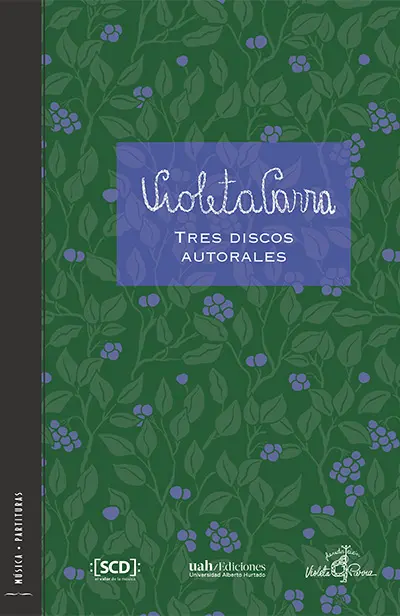
There is no sensitive soul that is not left immersed for life in the meditations, landscapes, colors, forms, characters, and stories to which Violeta leads us, where we miraculously always turn out to be the protagonists. That was what La Viola was all about: returning to us our image as a people, but with a restored, luminous dignity, fiercely defended by the very courage that she demands of us and finally grants us as an invaluable gift.
The importance and success of the musicological study and formal writing on the work of Violeta Parra lie in demonstrating that the artist left nothing to chance. That her work, as is the case in the work of every genius, is governed by the highest level of aesthetic consciousness.
Would you like to know if Chile is a Catholic country?, It begins with an overview of contemporary Catholicism, paying attention to issues such as the strengthening of pagan morality, the apostasy of the masses, and certain challenges like evangelizing workers. It also covers other aspects of the Catholic revival: conversions and the missionary, liturgical, biblical, and eucharistic movements. Particular emphasis is placed on the interior life of Catholicism. It also reviews “the miseries of our people,” meaning social problems such as housing, illiteracy, alcoholism, infant mortality, and the perceived estrangement of the people from the Church. It also addresses Christian life in Chile, examining its various aspects, and concludes that there is a lack of integral Christianity in our homeland.
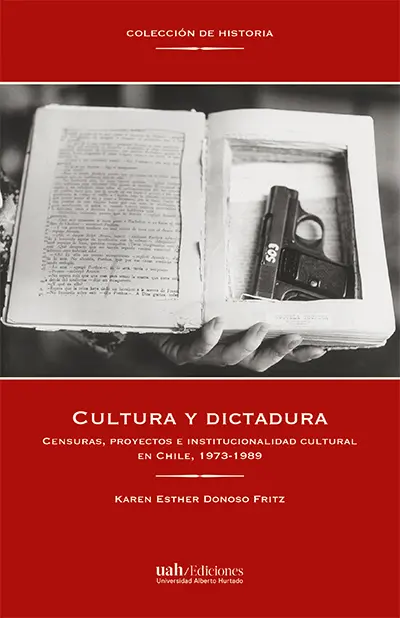
The military dictatorship established in Chile in 1973 has gone down in Latin American history as one of the cruelest and most ruthless of the 20th century. In the cultural sphere, social memory recalls this period as an era of restrictions and censorship, and for this reason, it has been metaphorically referred to with words like “blackout,” “darkness,” “gloom,” and “shadows.” But beyond the silencing of dissenting expressions, this dictatorship transformed the ways of conceiving culture and producing art in our country, by reconfiguring social and political relationships and transforming the paradigms of state functioning.
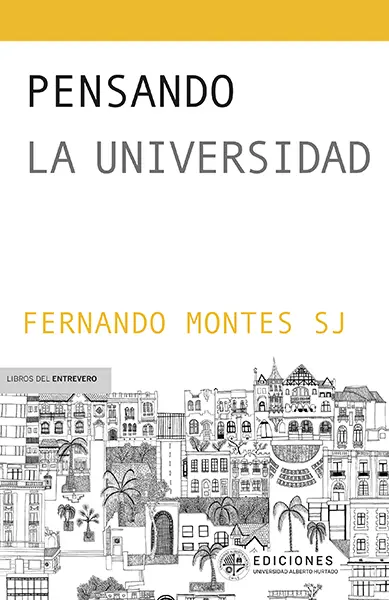
From his experience as rector and son of St. Ignatius, Father Fernando Montes SJ undertakes the task of vindicating the quality of the university as a humanizing community. Without discrediting the required accreditations and indexed publications, the beautiful text he shares with us reveals the wisdom with which the forgetting of the human being and the obsession with fragmented, utilitarian knowledge should be approached. In the face of profound cultural changes, which while entailing some risks, also bring great opportunities that compel us to rethink the university.
The Jesuits are said to be politically influential. Antje Schnoor examines the role they played in Chile during three governments: the Christian Democratic one of Eduardo Frei (1964-1970), the socialist one of Salvador Allende (1970-1973), and the military dictatorship of Augusto Pinochet (1973-1989). Her study shows that the Jesuit order was an important factor in determining the political attitude adopted by the Catholic Church, but that the order's members and institutions simultaneously acted as an autonomous political force in their commitment to democracy and justice.
For people who are searching, who want to clarify why they live and how to make their lives fruitful, who yearn to encounter God in prayer and discover ways to discern what the Lord asks of them, turning to Ignatius as a teacher and guide is a path. His figure has been rediscovered in these times of change and crisis; it has grown and become indispensable.
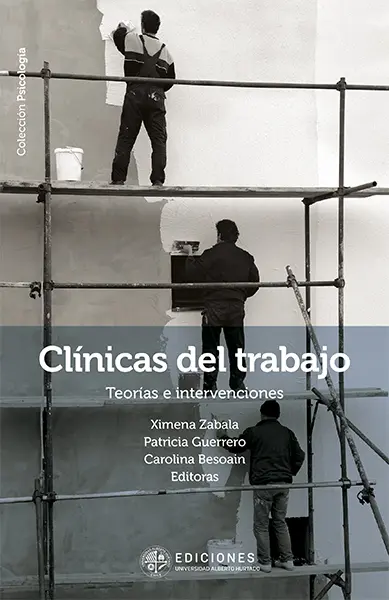
How to face the current complexities of the world of work? In what way have modernization processes affected the workplace? Are flexible management models responsible for the growing individualization of labor relations? How is experience transmitted? How to give meaning to work amidst the busy daily grind? Is it possible to understand the social and subjective scope of these transformations in work organization?
This book contributes to guiding clinical intervention processes in the workplace, providing theoretical and practical resources that enable public and private sector professionals to conduct well-founded and reflective interventions. In addition to theoretically presenting today's most important clinical work approaches, it showcases experiences from not only Chile but also other countries, thereby allowing for situated examples of the different approaches' methodologies.