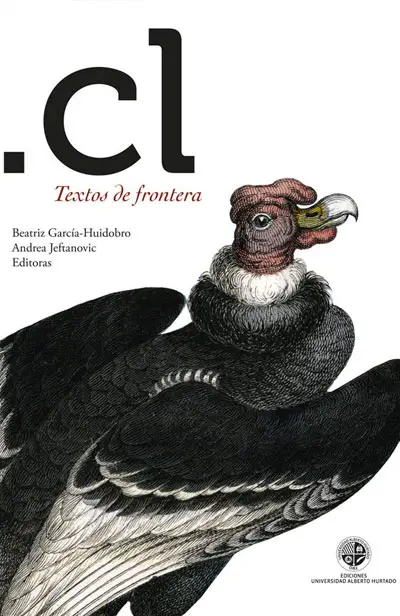
Authors of different generations, styles, places of origin, and themes were invited to participate in an anthology of unpublished texts, reflecting literarily on the theme of that border which troubles them, which for each is movement and friction, so that each author would be the cartographer traversing a border and sketching a map. And these maps, which they project, also outline a cartography of power and dependency relationships, of extreme landscapes, of the memory of political violence, of postponements, of revendications that still await.
Search Results for:
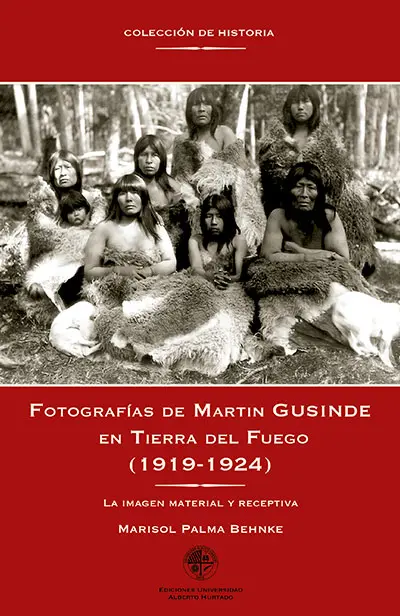
In Claudio Rolle's words, the journey leaves behind vestiges of restored life through objects, notes, and the traces that, more or less involuntarily, were left by those men and women whose vital chain was broken when their ethnic groups disappeared. Faced with such a tragedy, silence seems to be the first response, a silence of shock and awe, of respect and solidarity with the victims of an extermination. But then the imperative emerges forcefully that history, as a discipline of knowledge about the human adventure in time and society, demands of us in the fight against oblivion, which is true death.
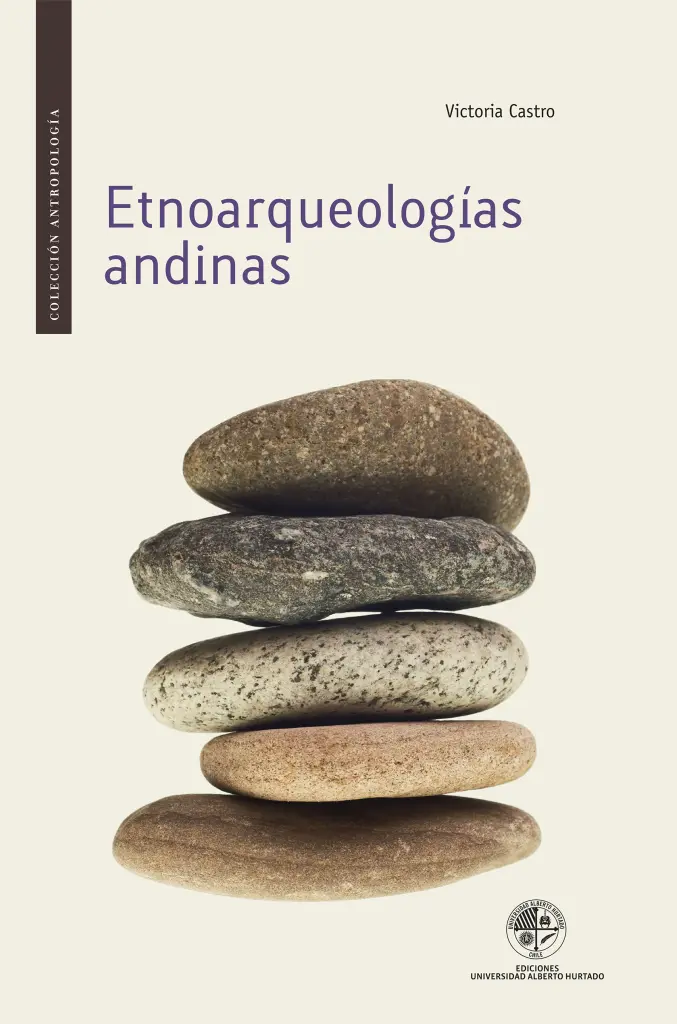
Mauricio Massone recounts that in the 1970s, some prominent young researchers (Victoria Castro, Carlos Aldunate, and José Berenguer, among others) met to undertake a series of archaeological, ethnographic, and ethnohistorical studies along the Salado River, in Toconce, and in the Upper Loa region.
One aspect of special importance that can be perceived in reading this book is the great sensitivity in giving meaning to historical knowledge in order to better understand the way of life of current communities: what their beliefs and aspirations are, how they are organized, what the local particularities are, what the sense of belonging to a greater Andean world is. This genuine commitment allows everything to flow in time and space, linking pre-Hispanic archaeological processes with current experiences, perceiving the color of caravan dynamics, and fixing a respectful and grateful gaze towards the tutelary hills.
Phenomenology, so to speak. Around this common thread, the volume unites the themes of the subject and affirmations (which is the epistemological status of Ricoeur's cogito), narration, reading, and translation, to which particular attention is dedicated, and this is also a quality that makes this collection appreciable. Furthermore, the themes of reading that goes beyond itself towards ethical commitment and the exercise of recognition—lectio transit in mores—as Erasmus of Rotterdam said, and of discourse that intersects with that of other contemporary authors; among the various sections of the volume are: Husserl, Heidegger, and the existentialist philosophers, Gadamer and Levinas, up to Henry, Derrida, Deleuze, and interlocutions with neuroscience and cognitive science.
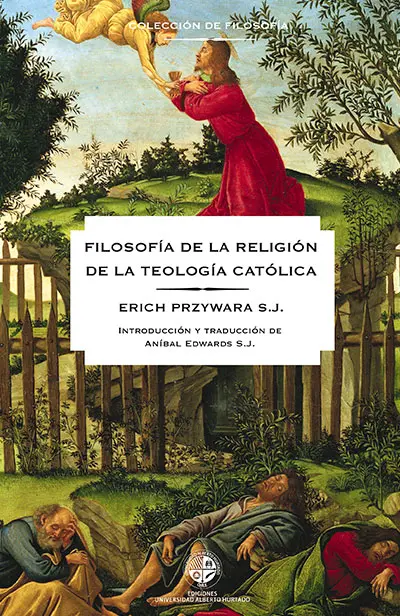
This work deserves to become a vade mecum for any meditation determined to give an account of its faith in God, in Christ, and in the Catholic Church. Przywara (1889-1972) designed this work not as a philosophical construct from a ‘first principle’, but rather as a ‘metaphysics of religion’, that is: as a theological understanding of the unitary Catholic fabric of faith and knowledge, starting from natural thinking. The analogia entis progresses from this natural thinking to its full Catholic theological figure. Przywara adopts the neo-scholastic Catholic distinction between natural thinking (cognitio directa) and philosophical thinking (cognitio reflexa): it fits better than ‘emotional intuition’, within the Schelerian context of the conception of the personal. Natural thinking, as an elective personal act, thus reflects in the face of the absolute of objective truth.
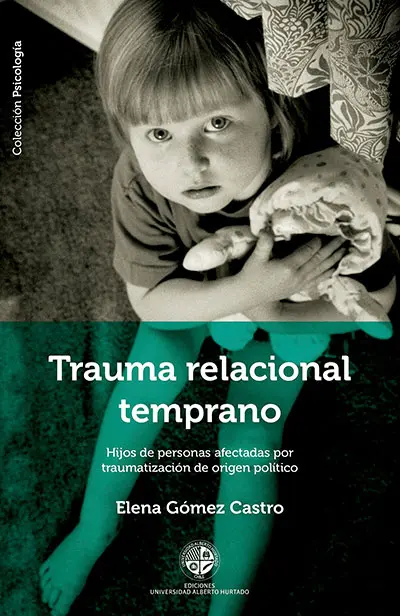
The configuration of early relational trauma is postulated due to the absence of emotional availability from parents, which determines the patient's relationships, the quality of the transference-countertransference dynamic, and her symptomatology. The book can be seen as part of the social mourning process in which we are still immersed. This implies recognizing the damage caused to our social body by the horror of the systematic violation of human rights following the breakdown of our democracy over forty years ago. Repairing this damage involves being able to inhabit a temporality that resists amnesia, so that the wound can fully heal.
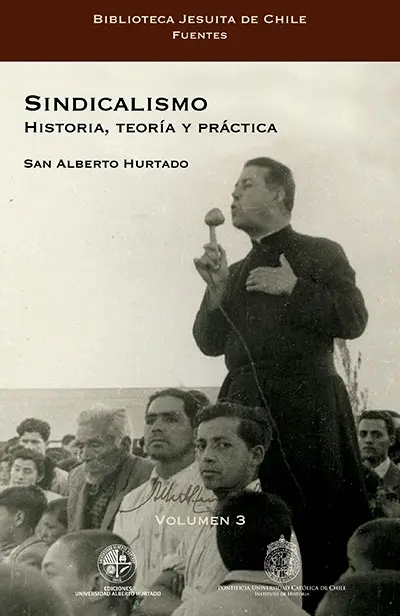
Like any prophetic gaze, this work by Saint Alberto Hurtado is not just a record of the past, but a challenge in the present. His words, like a fire that ignites other fires, call us to active discernment today and to confront the labor reality that still cries out for justice. Yesterday and today, being contemplative in action is the call to join the mission of serving the faith and promoting the justice it demands of us. This is where the relevance and the unique and special tone he offers us in his book lie.
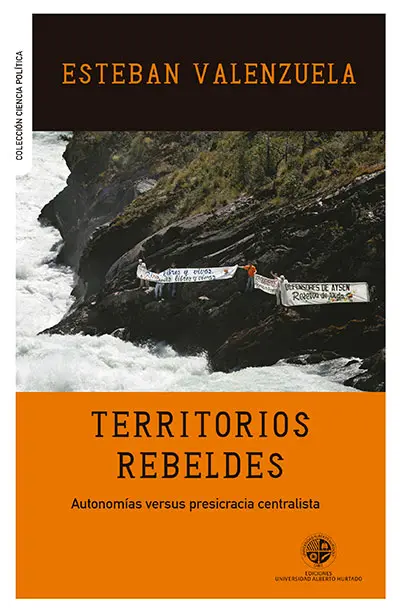
The rebel territories have not won, but they have pushed the boundaries of what's possible, succeeding in bringing back into public debate in Chile the ideas of regional autonomy, intercultural territory and Mapuche autonomy, co-participation of regions in mining revenue and natural resources, and consultations with communities in referendums on whether they desire mega electrical or extractive industries. The meta-narrative of slight historical incrementality in a gradual evolution of power to the territories, in a Chilean fashion, is maintained. The cycle of protests and territorial rebellion will likely continue.
The Manuel Larraín Theological Center (CTML) is an academic and research center belonging to the Faculty of Theology of the Pontifical Catholic University of Chile and the Faculty of Philosophy and Humanities of the Alberto Hurtado University. Its mission is to collaborate in the dialogue between Faith and Culture, through the discernment of the signs of the times undertaken by the Church. Created in 2005, the CTML provides a theological service aimed at recognizing God's action in historical events, through a twofold task: interpreting the historical present in light of faith and interpreting the Gospel and Scripture from the present situation.
Building on her previous contribution to Culture and Social Theory, Margaret Archer here develops her morphogenetic approach and applies it to the problems of structure and agency. Structure and agency constitute different levels of social reality, each possessing emergent properties that are real, causally effective, and mutually irreducible. Through a systematic consideration of the temporal dimension of social phenomena and a strong concept of emergence, she seeks to provide the foundations for a non-conflationary theorization of the relationships between structure and agency that will help the social analyst to empirically study the accelerated processes of social change in contemporary society.