Monday, April 22 → 12:30 p.m. → Casa Esperanza. Alberto Hurtado University Main Campus, Av. Bernardo O’Higgins #1825, Downtown Santiago. «Essays on Freedom: 200 Years Since the Abolition of Slavery of African Descent in Chile. From the Afro-Coquimbo Project: History After Oblivion.» Ediciones UAH, in collaboration with the Department of History, is organizing the presentation of this book, which…
Search Results for:
Cristian del Campo, S.J., is the new president of our university; on #FuturoPSP, he speaks with Andrea Moletto and Alvaro Pacci about immigration, higher education, and the Catholic Church. In this conversation, our rector shares his perspective on the country, offering a critical reflection on immigration policies, higher education, and the Catholic Church, as well as the role that…
Tuesday, March 26 → 12:30 p.m. → Aula Magna, Alberto Hurtado University Main Campus, Av. Bernardo O’Higgins #1825, Downtown Santiago. «Pacos: Police, the State, and Society in Chile (from the 19th Century to 1927) by Daniel Palma Alvarado.» The research in this book seeks to trace the history of the various forces that performed police functions from the colonial period onward…
Tuesday 03/19 → 4:30 PM → Sala Bellarmino Av. Bernardo O’Higgins 1825 Santiago Centro. Casa Central Universidad Alberto Hurtado. «Home and Dignity: The Squatter and Resident Movement in Chile,» by Miguel Pérez. This presentation interrogates the forms of collective action developed by homeless families, those living with relatives, and camp dwellers...
Wednesday 03/13 → 12:00 PM → Aula Magna, Av. Bernardo O’Higgins 1825 Santiago Centro. Universidad Alberto Hurtado Main Campus. «The Dark Men. Blood and Hope. Critical Edition by Juan José Adriasola and Luis Valenzuela.» On this occasion, we will present this critical edition of two of the most notable social novels of the 20th century brought together in a...
In recent years, there has been a growing interest in studying the Afro-descendant presence in Chile. It is evident that the abolition of slavery did not mark the end of the issues associated with the Afro-descendant population. On the contrary, it triggered a series of consequences that deserve careful analysis, without resorting to simplistic or unilaterally institutional viewpoints. This book invites us to question traditional interpretations and to consider the multiplicity of factors that influenced the outcomes after abolition. Each essay offers a unique perspective that enriches our understanding of this complex and multifaceted historical process.
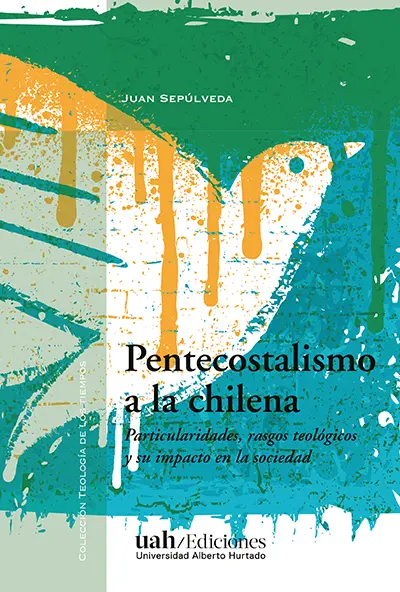
Until now, Pentecostalism has been studied from a predominantly sociological perspective, tending to interpret conversion to Pentecostalism basically as a mechanism of social and cultural adaptation to the changes experienced by Chilean society, thus neglecting its strictly religious dimension and its theological significance. This book, following a panoramic overview of the historical and theological backgrounds of Pentecostalism globally, introduces us to the Methodist roots, the origins in Valparaíso, the theological particularities, the insertion into popular religious culture, the relations with other churches, and the impact on society of “Chilean-style” Pentecostalism.
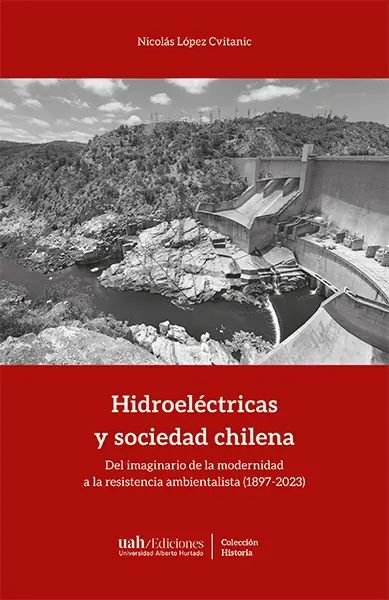
Considering the planning, construction, and commissioning of three large power plants – Rapel, Colbún, and Pangue-Ralco – this book analyzes the existing social representations surrounding hydroelectricity in Chile. Thus, it is postulated that there has been a sustained transition from an imaginary associated with technocratic modernity, under the slogans of development and progress, towards a resistance anchored in the environmentalist movement, within the framework of the articulation of new social movements in Chile and worldwide. An essential read for discussions on ecology, climate change, environmental justice, and ecosystem alteration in contrast to the growing energy demands of the population.
Thursday, January 17 | 5:00 PM | Berlarmino Hall, Av. Bernardo O’Higgins 1825, Santiago Centro. Universidad Alberto Hurtado Main Campus. «Elites and Education: Between Renewal and Reproduction. Chile and Latin America.» Cristóbal Villalobos and María Luisa Quuaresma. This book brings together the work of academics who write about how elites...
If there is a political content worth emphasizing regarding the project of Nicomedes Guzmán and his peers of the 1938 generation, it is that the construction of their idea of a nation starts from a fundamental misconception: the illusion that there is no distance between the artist and the margin, the worker and the literate, the victim and their chronicler, just as there will be no distance among Chileans when they realize that they share the same soul or the same blood. It is true that Blood and Hope he argues in favor of social inclusion, but it is no less true that he intends to enter a space that they themselves seek to define in an essential way.