'

Search Results for:

Manuel Rojas – Complete Short Stories

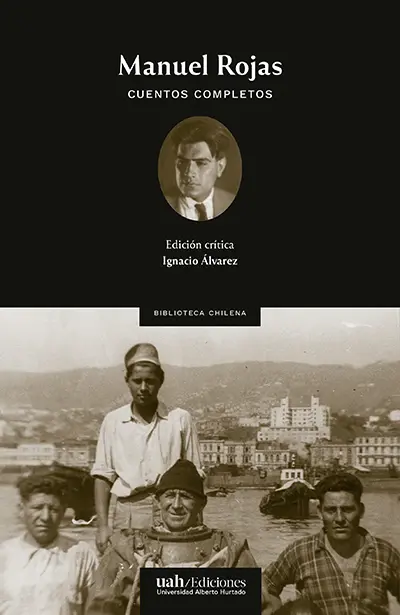
It is not easy to find in Chilean literary history a narrator who understands his time in such a complex and consistent way as Manuel Rojas, and that wisdom is born from the variety and intensity of his life experiences. The man who writes these stories is someone who knows hunger intimately, the arbitrariness of hierarchies, the hardness of rock, but also the creative possibilities of literary fiction and its ability to articulate human communities.

Manuel Rojas, then, appears to us as a plural subject. He inhabits various times, knows various places, and has been various subjects. The writing of his stories transforms this plurality into a space that offers recognition to people from very diverse historical and vital backgrounds. In this, he coincides with the most pronounced sensibility of 20th-century Chile and also with a permanent aspiration of the modern project.

The best Chilean journalism 2020

This book is a reflection of these tumultuous and fascinating times. New characters emerged, profiled, interviewed, denounced, and celebrated within these pages: the fed-up middle class, social movements (women, indigenous people, retirees without pensions, the sick without hospitals, unemployed workers, homeless families, immigrants without a future). Healthcare and education workers, looked down upon by financial billionaires, have now become the essential ones.

The journalism that shines in these pages not only bravely tells and explains the truth. It helps us form new generations of a public eager to know, understand, and participate with full knowledge.

What will a future historian be able to find in this book about journalism from this year, which began in the midst of an outburst, continued with an unexpected pandemic, and ended with a hopeful referendum to change the constitution and dream of a new country?

Many events—so many painful, unjust, and reprehensible ones—happened in 2020. But, with limitations and difficulties unimaginable a few months prior, the fellowship of word professionals was able to produce excellent journalism.

Sport, Masculinities, and Mass Culture

Sport, as a novel element in the late 19th century and more clearly in the early decades of the 20th century, consolidated itself as a space of symbolic confrontation relevant to the modern configuration of Chilean journalism. More importantly, magazines managed to reconcile elements of popular culture (collective imaginaries, local customs, social aspirations) with elements of the emerging mass culture and incorporate these elements within the Chilean political culture that the State built in the mid-20th century.


Merit and meritocracy

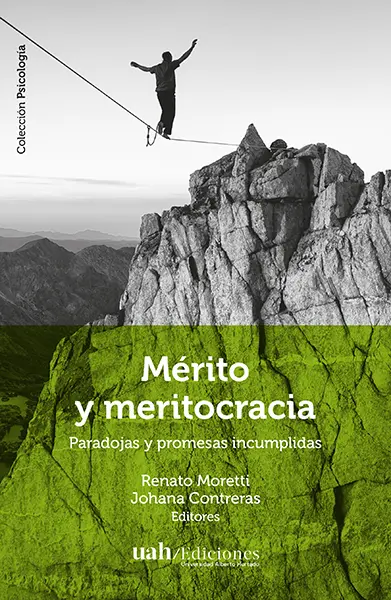
It is not convenient to forget the problems of merit and the origins of meritocracy. Despite its satirical beginnings and constant criticism of its harmful and illusory nature, the meritocratic principle has spread widely as a way to reconcile equality and inequality. Today, when the deepest and most varied inequities are plainly revealed, it is necessary to question one of the most widespread ideas about how to manage and justify them.

This book proposes to analyze different promises and paradoxes of merit and meritocracy, articulating a psychosocial and critical perspective that brings psychology into dialogue with the social sciences, education, and work. The work is organized into three parts, which address the relationships between meritocracy and social inequalities, and different intersections of merit with education and work.

As François Dubet points out in his contribution to this book, “meritocratic equality of opportunity” presents many challenges in its implementation and also paradoxes: “the realization of a model of justice, perfectly fair a priori, it can be sustained on uncertain foundations, and, even worse, it can engender unjust effects to the extent that it legitimizes and deepens social inequalities that we might consider scandalous.” Through its various chapters, this work invites us to systematically examine and problematize merit as a ubiquitous and paradoxical principle of justice.


A Church devoured by its own shadow

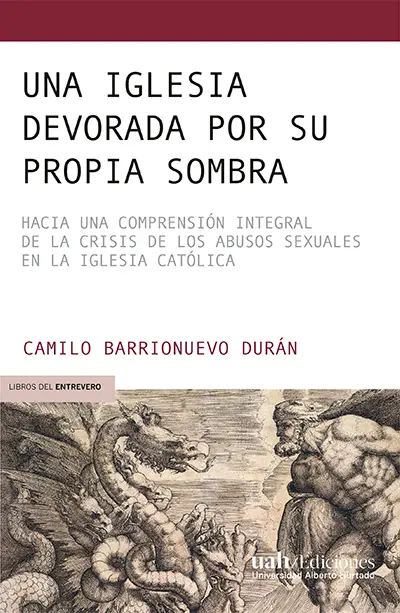
With Carl Jung's contribution on dark complexes as a backdrop, this brings us closer to the shadow of a Church that gazes at itself, like Narcissus contemplating his beauty, while it walks naked through the cries of those who have remained silent for decades about the suffering endured under its protection. The victims of yesterday, survivors today, will find in these pages what sustained and sustains those who abused them. Without that ideological support, without the complicity of abusive structures in many areas, without institutional narcissism cloaked in clericalism, without the secret and dark experience of a poorly assimilated sexuality, among some of the keys to understanding addressed in this book, the impunity of their actions and the clumsy institutional response when the truth stands starkly before their eyes are incomprehensible.

Here!

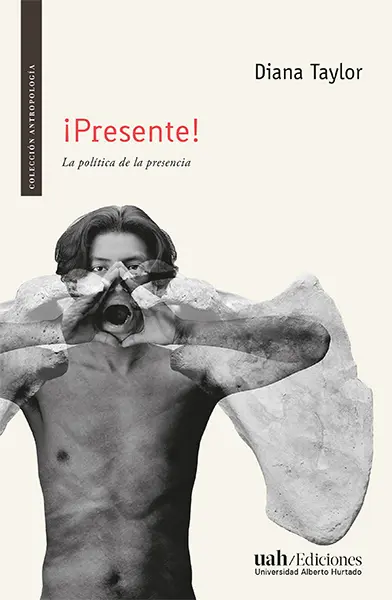
In this journey, the author joins fellow travelers, breaking away from disciplines and academia in search of alternative epistemic practices elsewhere, in art, performance, and other ways of world-making. ¡Presente! does not view knowledge as something to be harvested and commercialized, but rather as a doing, a committed knowing, a process of being, walking, speaking, and listening to and with others, with all the pitfalls, complications, contradictions, and responsibilities that entails.

Life Seekers

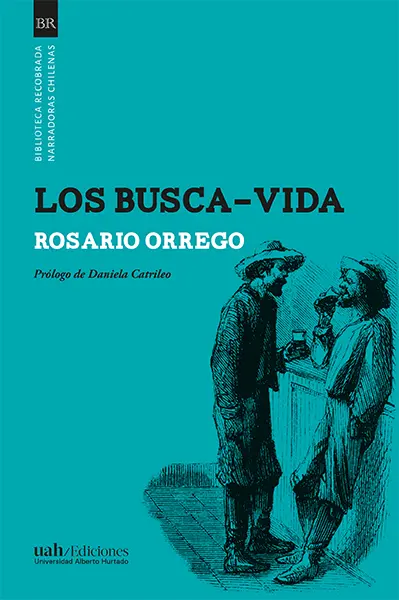
Orrego's work weaves together the stories of various individuals determined to find fortune, in contrast to indigenous subjects depicted as inhabitants of primitive times who, faced with the modernization of their territories, are compelled to interact with Creoles, mestizos, or foreigners. All of this is interspersed with scenes of industrial development, such as descriptions of the railway, steamships, and the telegraph, as well as landscapes of small towns and their popular histories. Likewise, some historical and political events from Manuel Bulnes' presidency are described. These are societal changes that Orrego observed from his childhood, events which, moreover, are closely related to his family's involvement in the mining business.

Schools in transformation

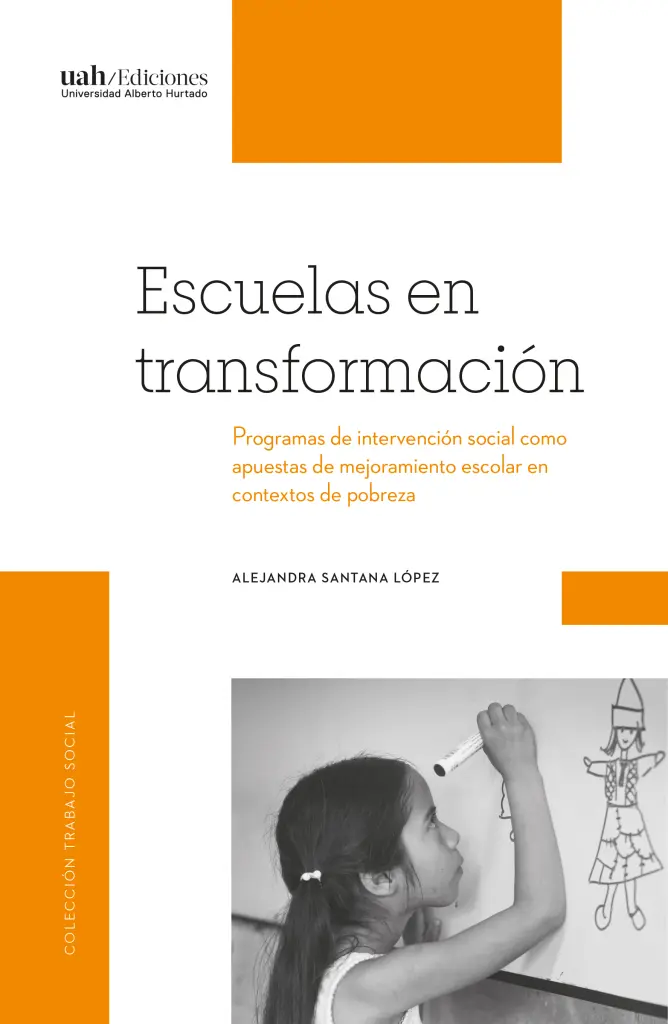
Approaching social intervention programs implemented in schools provides an opportunity to understand how these processes are generated and developed, processes which hold horizons of social transformation and impact communities, families, and children. What is presented in this book is an analysis of the implementation processes of social intervention programs in disadvantaged contexts within the current educational reform in Chile, from the perspective of their communities. This book addresses the articulation between the analysis of educational policy, the approach to schools as living communities, and the implementation of programs with their strategies and techniques.

A sidelong glance

This book, the first dedicated entirely to the work of Valeria Sarmiento, contains a series of essays that address various aspects of her film work and a selection of documents that include her acceptance speech for the Honorary Doctorate awarded by the University of Valparaíso, an extensive conversation with the editors, an annotated filmography, and an image album of her career.

Crime and Violence Prevention

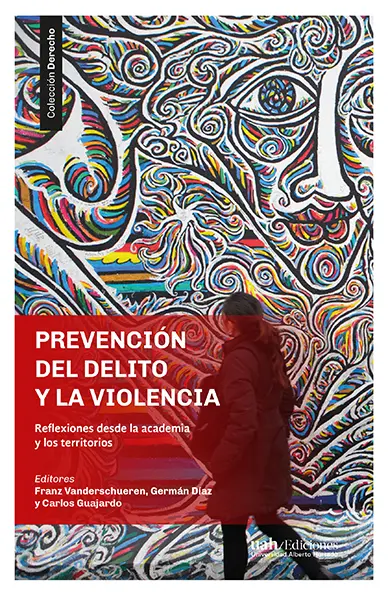
The Latin American region is lagging behind regarding the issue of crime and violence prevention. Although there have been specific experiences and policies emerging since the 1990s in some cities, no government has sustainably and systematically built a policy in this regard. There are only some situational prevention measures and an agenda marked by punitive populism that assume police repression, often in contradiction with human rights, is the best recipe against crime or at least the one that should respond to the priority demand of a public opinion that has been asking for greater security in all countries of the region since 2005.