'

Search Results for:

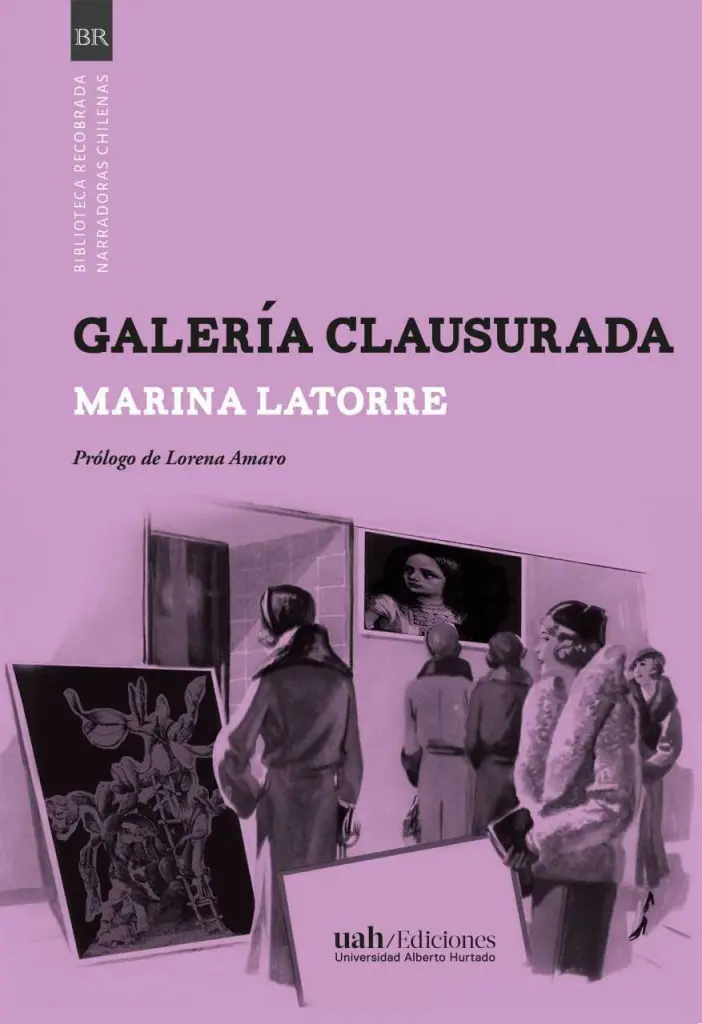
Gallery closed

In her texts, Marina Latorre pays special attention to dialogue. With short, direct, and simple sentences and paragraphs, she seeks to capture, with a few strokes and without necessarily aiming for literary verisimilitude, the atmospheres and disputes in which her characters find themselves. Just as yesterday, today a commercialized and elitist understanding of art continues to clash with another of a romantic, progressive, and liberating kind, which in the 1960s took the form of social “commitment.” This tension animates many of these stories, in which different voices in dispute collide.

Lost County

The girl Yáñez shows us in the pages of her book is not like those who dance in Gabriela Mistral's rounds; she is not ready to be swept away by delirium, not ready to be noticed. And yet, we notice her, follow her, accompany her. The adult narrator has managed to update the past through a fantastical account, yes, but one full of details. What is marvelous about this text is that without disregarding the fears, pains, losses, and worries that childhood is full of, and by unifying those experiences with games, joys, and calm, María Flora Yáñez has constructed a text that manages to represent the complexity of a childhood (hers) and, with it, to recognize that every childhood is unique and unrepeatable.

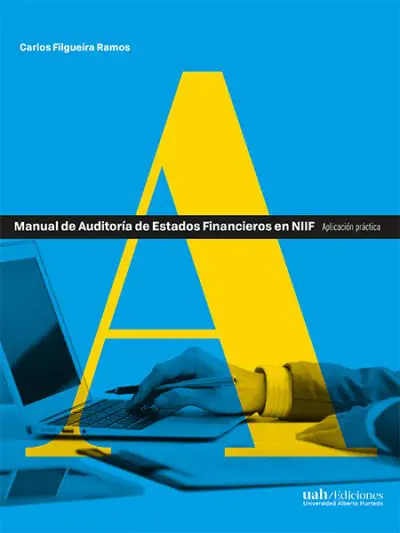
Financial Statement Audit Manual IFRS

Accounting science, as a social construct, has evolved and transformed into an unavoidable facilitator in the significance of business organizations, especially in scenarios of high complexity and technological integration, making it possible to homogenize and standardize related information. Auditing has allowed, based on standards and survey and evaluation techniques, to homologate and promote good practices for an adequate internal control of said organizations, contributing, in its most substantive contribution, to transparency and access to information for the various actors of the socio-economic system.

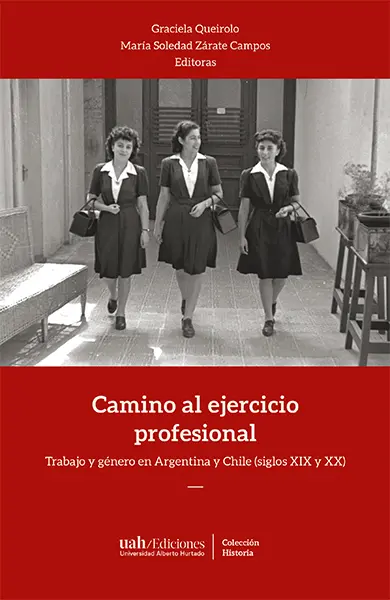
Path to professional practice

This book reviews the history of certain professions in the cases of Argentina and Chile. It analyzes how certain professions were, strictly speaking, defined as the formal extension of caregiving tasks historically and naturally attributed to women as their own, such as those of nurses, midwives, or social workers, and how female physicians appropriated these conceptions to chart their political careers. It also describes professions exploring new paths, such as those undertaken by schoolteachers, female writers and editors, saleswomen, or secretaries in established urban commerce. Finally, it examines the labor trajectories of railway workers, drivers, and building superintendents, all of whom were committed to valuing their particular occupations.

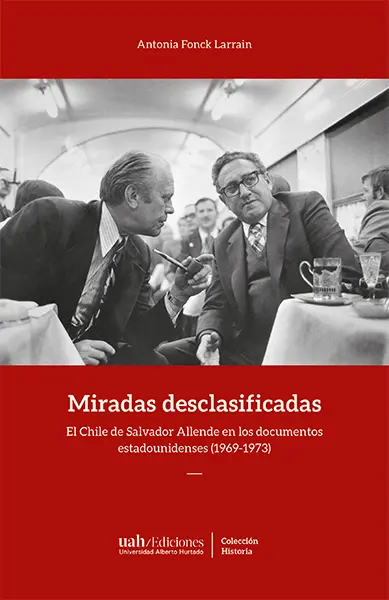
Declassified Looks

In September 1974, President Gerald R. Ford, anticipating the political storm ahead, acknowledged the role the U.S. government had played in the events leading up to the 1973 coup in Chile and the establishment of the Pinochet regime. He stated that the activity of democratic forces had been supported. His declaration was part of a wave of political upheaval in Washington, where, among other things, the issue of Chile spurred intense self-criticism, the echoes of which remain in public life and in political and academic debate. Was Washington responsible or the fundamental actor in the fall of the Popular Unity government? Or was it one of many external actors involved in an internal Chilean process that had deep roots in its history and political culture, its own passions? The last word has not been said.

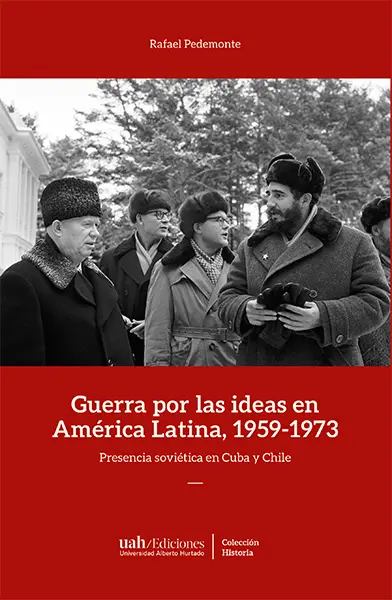
War of Ideas in Latin America (1959-1973)

The fall of the Soviet Union (USSR) at the end of 1991 produced a break in the way of approaching the study of international relations, significantly renewing the academic perspectives dominant until then. A new crop of young researchers, less bogged down in old ideological rivalries, set out to overcome old notions and emphasize novel aspects—such as the role of culture—in order to provide a more complex vision of the priorities of conflicting states. In this way, the East-West confrontation began to be understood as a singular phenomenon; as a “battle” in which the struggle for the ideas of individuals often displaced the will for territorial superiority or military confrontation. But although studies that elevate cultural interactions as key axes of the Cold War have been fruitful in Anglo-Saxon historiography, the Soviet perspective on the matter is still in an incipient phase.

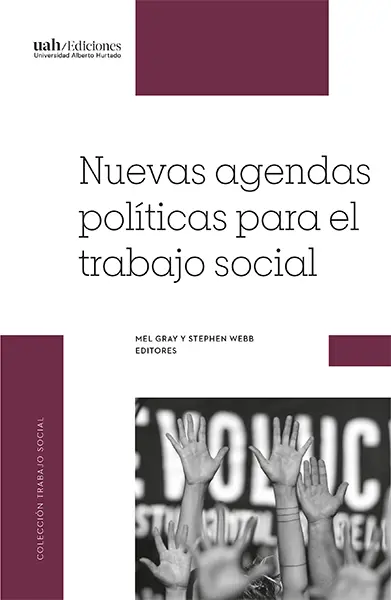
New political agendas for social work

Despite the various approaches to critical social work—from feminism, postcolonialism, and anti-oppressive perspectives—a new political agenda must be driven by a set of common principles. Thus, critical social work reflects a “zone of political engagement” for students, researchers, and frontline practitioners, allowing them to take stances of resistance against the hegemonic order. This means taking a stand in support of those who are oppressed, exploited, or treated unfairly.

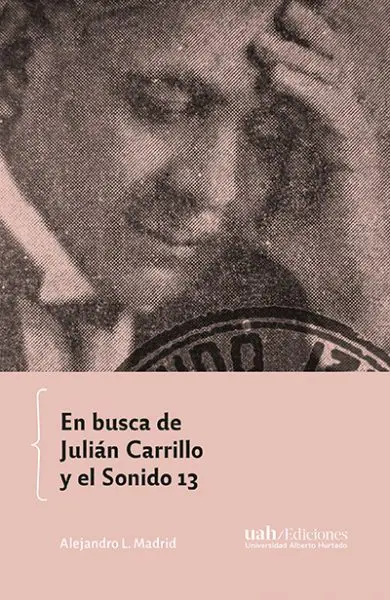
In search of Julián Carrillo and the 13th Sound

In the 1920s, Mexican composer Julián Carrillo (1875-1965) developed a microtonal music system that he called Sound 13. Although his role as one of the pioneers of microtonalism in Western art music led Carrillo to be considered an icon by the European avant-garde during the 1960s and 1970s, his music and legacy have remained largely unknown among musicians, academics, critics, and the general public.

The harvest

At the beginning of the 21st century, we can take a look at the abundant harvest of struggles sown over time by grassroots Christian women and men, whose religious beliefs sustain their daily efforts to survive and to bring about justice. The author makes it clear that Hispanic/Latino theological work is not monolithic, but rather
What is a work enriched with different perspectives, all of them rooted in the struggles of our people. Hispanic/Latino theology is as mestizo/mulatto, as hybrid, as our culture, as our language, as our daily lives.