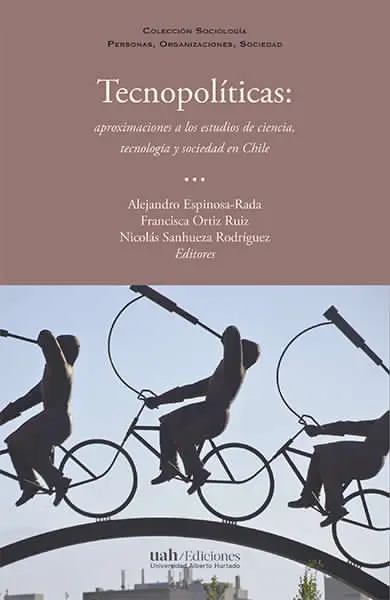
The book presents the research of various Chilean academics who have made substantial contributions to this field of transdisciplinary studies, both in their home country and abroad. These works cover a wide diversity of topics, from the study of innovation and consumption to disaster management, environmental conflicts, health, and family public policies. Beyond this thematic diversity, what unifies them is the express desire to understand science, technology, and society as intimately intertwined areas, impossible to truly understand separately. From this perspective, current Chilean development is ultimately seen as a technopolitical project in which new ways of doing and understanding politics and culture have always gone, and must continue to go, hand in hand with the emergence, stabilization, and critique of scientific and technological innovations.
Search Results for:
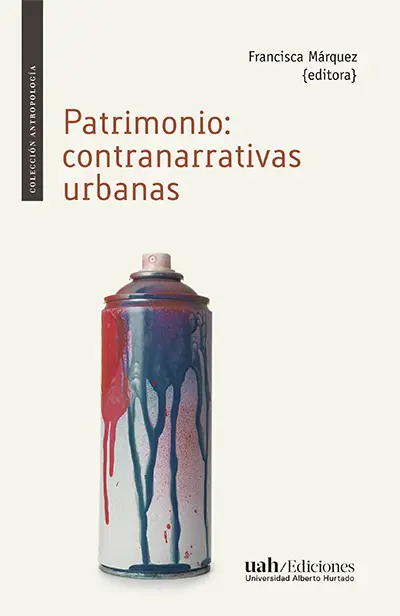
The premise is that the definition and installation of monumentality contain the ideals and utopias of the nation. This task has historically been the privilege of the State and its institutions, thus tending towards a monolithic and exclusionary narrative about the ideal city. However, cities and their monuments are also spaces of contestation, whether through writing, rewriting, or the commemorative performance of their re-signified forms.
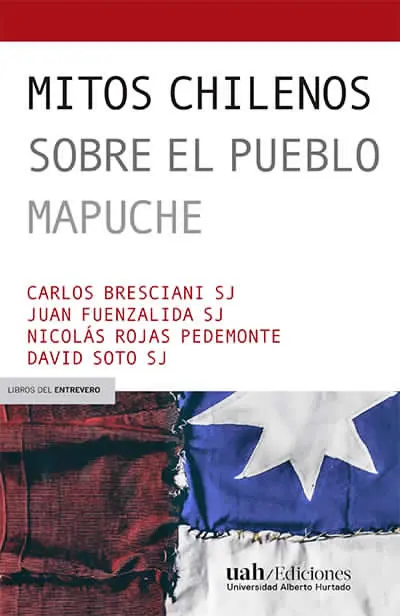
Written from within Chilean society, this book constitutes an exercise in self-criticism that we rarely undertake. The authors help us deconstruct preconceptions forged by generations that shape our relationship, as Chileans, with the Mapuche People. It appears at a time when various forms of violence continue to be exerted against Mapuche communities. For this very reason, it represents a major contribution to building new ways of relating—less prejudiced and more intercultural—among the different peoples and cultures that coexist in Chile.
In this compilation, featuring some of the best Chilean journalism published in 2018, the main themes and figures of the year are represented. These are topics that set the agenda and fueled debates, challenged official truths, brought down public officials, or at least brought them into question; topics that moved, touched, or outraged us, as the case may be. This book represents the memory of print media that no longer exist, as well as the presence of some digital media and sections of media that have emerged recently. This book is a tribute, a testimony, a denunciation, an homage, and a memory, and perhaps for all these reasons, we remain committed to publishing it in print.
The Chilean “welfare state” was generous and expanding until the 1973 coup d'état. During the dictatorship, this traditional system was destroyed, and a dual and residual system was imposed by force. Since the restoration of democracy, and especially since 2000, the Concertación governments have attempted to expand its coverage again, seeking to (re)establish a more universalist coverage system. In this book, Ana María Farías significantly questions this common notion. She does so with historical rigor and a comparative approach, meticulously reconstructing the development and evolution of the Chilean social protection system, from its origins to the present day.
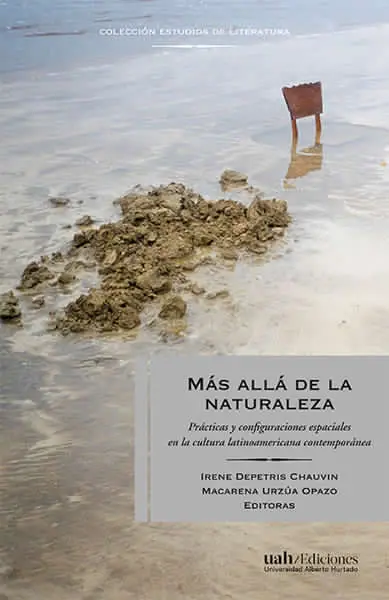
This book, produced jointly by the Art and Literature departments, brings together articles and works by artists that together trace a critical and aesthetic journey through new imaginaries and conceptualizations of natural space. Along this journey, notions such as “geography,” “territory,” “landscape,” “cartography,” and “itinerary,” among others, are rethought and made significant in relation to a diversity of cultural practices. New shifts among the various media of contemporary arts are studied, making it possible to think not only about the geographical meanings of space, but also about spaces such as those of reading, the novel, and the poem, and their redefinitions in visual and sonic terms.
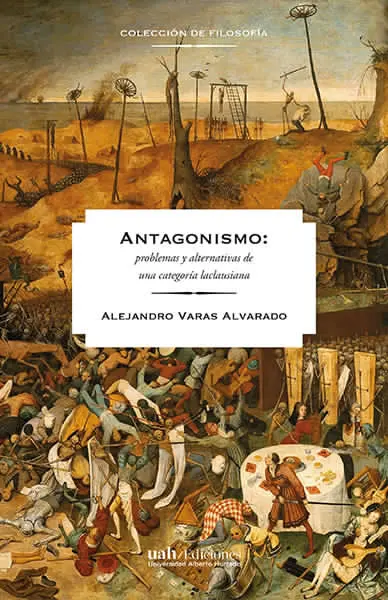
This book presents a critical review of the category of antagonism, one of the most important contributions of the Argentine political theorist Ernesto Laclau. In the text, Alejandro Varas undertakes an exercise in theoretical and political problematization of Laclau's formulation of antagonism, placing it in dialogue and tension with other theoretical readings. As a good intellectual, the author understands that to know a theory, an exhaustive description is not enough; its limits must also be analyzed, and this is the task he undertakes in this work.
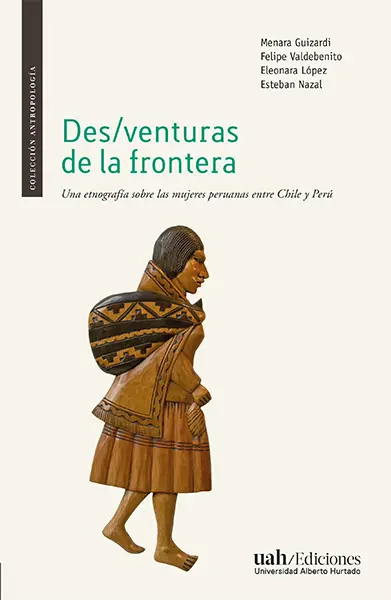
For several years, the authors dedicated themselves to accompanying the experiences of Peruvian women who live, transit, and work between the border cities of Arica (Chile) and Tacna (Peru). With enormous generosity, they opened the doors of their homes and shared their life stories, as well as those of their mothers and grandmothers. The narrative of these women, the time, and the scenes they shared, led to the central theme of this book: the relationship between gender violence, the constitution of agency, and the “feminine being” of migrant women who face (not always successfully) the impositions of patriarchy on the borders of the nation-state.
Since 2003, the School of Journalism at Universidad Alberto Hurtado, through the Premio Periodismo de Excelencia (Excellence in Journalism Award), has recognized the best articles published in national print media during the year. With the input and debate of an independent and diverse jury, composed of journalists and academics with distinguished careers, the award seeks to recognize and encourage professional practice with the highest ethical, investigative, and writing standards. The works included in this book showcase the events that impacted 2017, such as Daniela Vega, SuperTanker, Rafael Garay, Big Data, Piñera's zombie companies, Alessia, notaries, among many other events that depict a year convulsed by news stories.
Finalists 2017
Nicolás Alonso * Álvaro Bisama * Matías Brown * Estela Cabezas * Rodrigo Fluxá * Alberto Fuguet * Arturo Galarce * Juan Andrés Guzmán * Daniel Hopenhayn * Sergio Jara * Mirko Macari * Alejandra Matus * Constanza Michelson * Benjamín Miranda * Pilar Navarrete * Tamy Palma * Claudio Pizarro * Daniel Pizarro * Natalia Ramos * Sebastián Rivas * Jorge Rojas * Jonás Romero * Juan Pablo Sallaberry * Matías Sánchez * Francisca Skoknic * Vicente Undurraga * Noelia Zunino
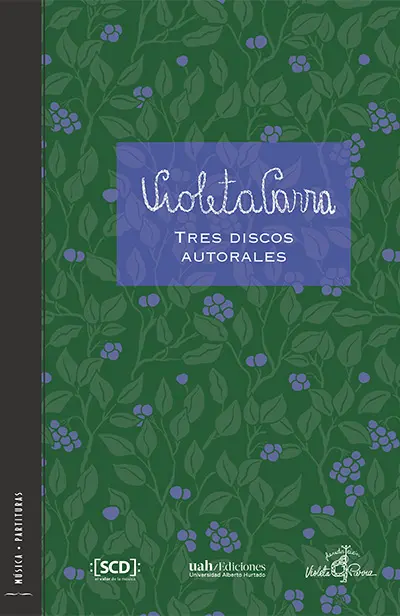
There is no sensitive soul that is not left immersed for life in the meditations, landscapes, colors, forms, characters, and stories to which Violeta leads us, where we miraculously always turn out to be the protagonists. That was what La Viola was all about: returning to us our image as a people, but with a restored, luminous dignity, fiercely defended by the very courage that she demands of us and finally grants us as an invaluable gift.
The importance and success of the musicological study and formal writing on the work of Violeta Parra lie in demonstrating that the artist left nothing to chance. That her work, as is the case in the work of every genius, is governed by the highest level of aesthetic consciousness.