Translation by Alejandro Gorr
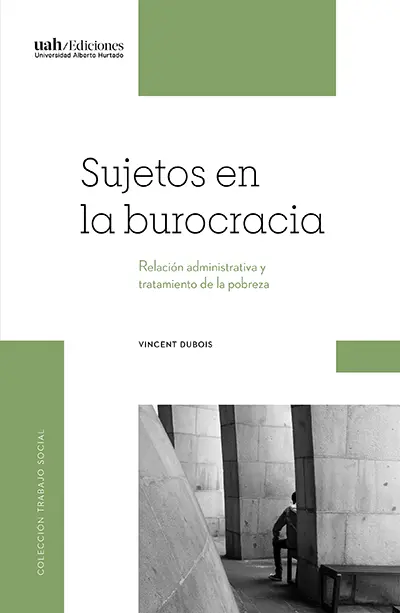
In a region where interactions between the poor and state bureaucrats multiply and become indispensable for the survival of the neediest, this brilliant and illuminating text provides us with diverse methodological and theoretical tools to understand and explain their necessity and effects. This is a necessary and pertinent book not only for understanding the complexity and ambiguity of both the material and symbolic aspects of bureaucratic encounters, but also for the construction of a political sociology that attends with equal emphasis to interactions, classifications, relations, and processes.
Search Results for:
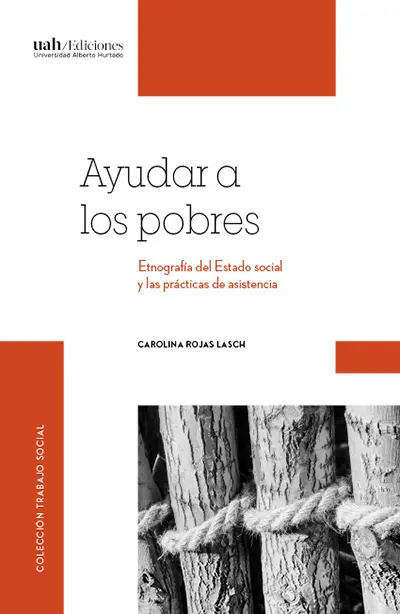
This book addresses aid to the poor as a political object, meaning an instrument of politics through which society will transmit normative ideas about itself; in short, a contested field. In this sense, aid is a mode/means of social reproduction while also being understood as a field of interest that arises from decisions and power plays. This implies recognizing its capacity to construct reality, that is, its productive potential. The research has, therefore, been constructed from the interdisciplinary and critical intersection of political anthropology, the sociology of aid, and the study of affect.
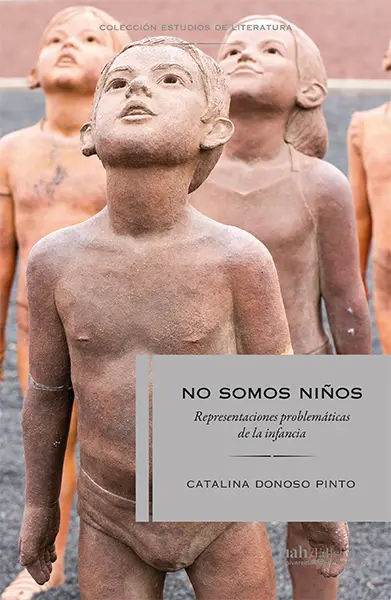
The author reflects on a particular film and literary production, offering a perspective on childhood that is both distant from and close to the viewpoints of philosophers and great film theorists and directors. The author recognizes children not only as subjects with rights, but also as those who, through aesthetic production, provide insights into the cultural and social operations that restrict their lives and their own cultural significance. Childhood's loud and rebellious voice, we are told, permanently interferes with our language and the designs of patriarchal and conservative entrapment. School and family, as the analysis of some films and literary works warns, continue to be the main pillars of their misunderstanding and domestication.
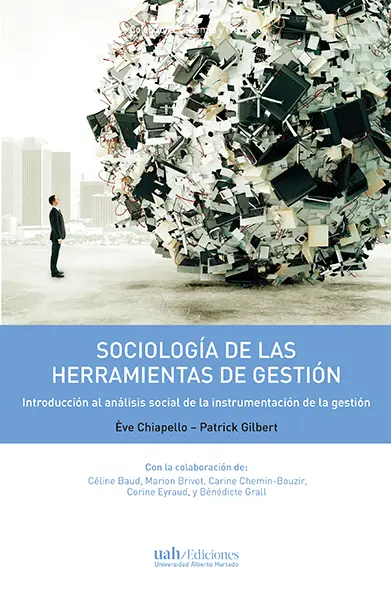
This book introduces management tools in the analysis of social and organizational phenomena. It questions where these instruments come from, how they become established, what changes they undergo in their local application, and how they affect social relations. To this end, it reviews and contrasts different theories that have addressed this topic since 1990, from sociology, political science, and social psychology, as well as from management sciences. Based on this, it proposes its own framework and methodology to approach the issue in a comprehensive manner.
This book won the FNEGE Award for Best Research (2014)
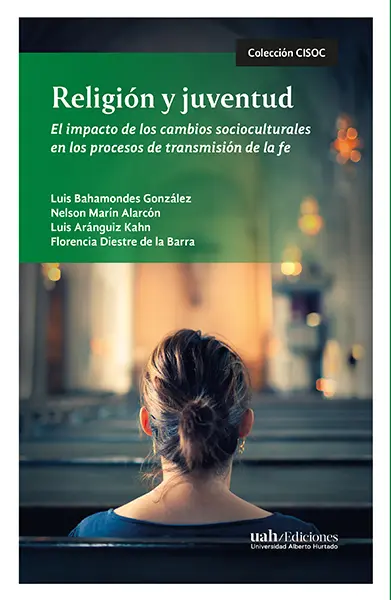
This research examines how young people in Catholic schools conceive of their relationship with the Church and matters of faith. It shows how, while certain traditional forms persist, there are also innovations that, although they might seem unusual to believers of other generations, are more common than one might think. It is not, as one might initially assume, that these new generations necessarily have a loss of religiosity, but rather that religiosity is experienced in different ways. This is where the importance of this work lies for Chile as it opens to the new decade of the 2020s, a decade full of new challenges for all sectors of society and, of course, also for believing sectors.
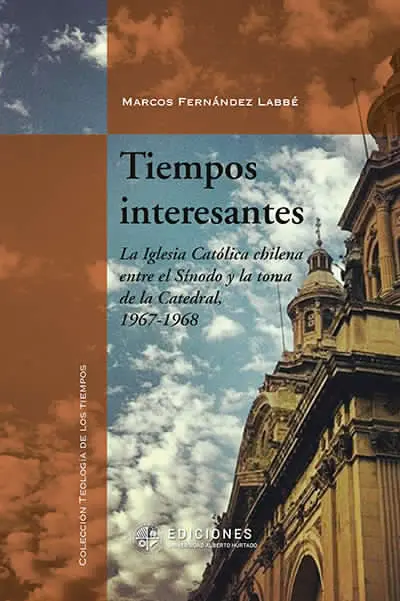
Between 1967 and 1968, the Catholic Church in Chile experienced one of the most intense periods in its history: to implement the transformations inspired by the Second Vatican Council, the Synod was organized in Santiago. This meeting was attended by hundreds of laymen, laywomen, nuns, and priests, and it signified a profound review of the ways of relating between the Church and the world, and beyond that, of its practices, its weaknesses, and its horizons.
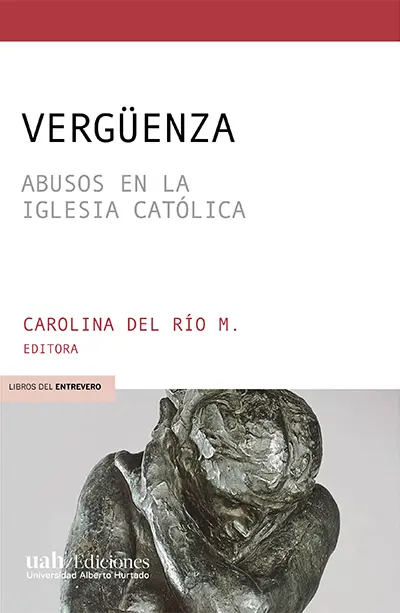
A crisis cannot be resolved without delving deep enough into it to understand it. The scandal of abuse within the Church – of power, of conscience, and sexual – has reached a global scale and accounts not only for individual sins and crimes but above all for paradigms, systems, structures, and institutions that have facilitated the commission of abuse, its concealment, or impunity. This volume includes the testimony of victims and the reflections of numerous specialists. From fields as diverse as theology, psychiatry, psychology, history, law, and education, the situation of abuse in the Chilean Catholic Church is addressed. It is a painful and shameful journey, but there will be no healing outside of it.
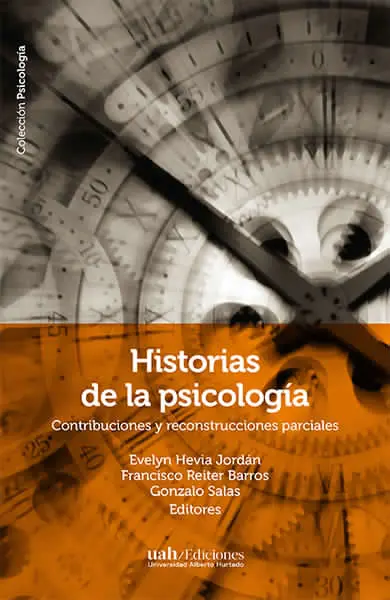
Contributions and partial reconstructions of the histories of psychology are presented. Thus, in the plural, because both each author of the thirteen chapters that make up this book and its editors problematize the notion of History of Psychology as a grand narrative of the disciplinary past written in capital letters. In this sense, it is a work that aims to contribute to a historical interpretation of psychology, its concepts, its figures, and its contributions to the discipline, as well as to the uses it has had (and has) in the political and social field.
Given that Chilean universities –places that traditionally housed intellectuals and academics– were intervened by the military junta and restructured in their meaning and function, one could not seek out knowledge generators and researchers there. NGOs emerged after 1978, filling this space and revitalizing academic research and social intervention. They were diverse in their institutional nature as well as in the actors, topics, and debates they developed. And not all those who were part of this group of social scientists had the same networks and reach, relationships with political parties, resonance, and even less so, the same positions on democracy and democratization.
Over the last twenty years, the study of intonation has been arousing growing interest among speech specialists, to the point of becoming a central topic in current phonetics and phonology. Hidalgo approaches the study of intonation from a novel perspective in phonetics and phonology, anchored not in the description of an ideal system (which often turns out to be more of a theoretical “prescription”) but in the analysis of actual speech functioning in real life: the analysis of colloquial speech.